
| Monthly Book Drawing - Rand African Art |
| PREVIOUS BOOK DRAWINGS January 2007 The winner of this book for the January drawing was: Jeffrey Hood from Tennessee January's book drawing is for a visually fantastic book called "Vanishing Africa: A Photographer' s Journey". I got this book as a gift for the holidays and loved it so much that I ordered a copy to give away in a book drawing. The book manages to transport you into a different reality through the wonderful photos contained in it. As I turned each page my mind took a step back and wondered about the daily lives and realities of the various cultures in the remote areas of Africa that were photographed in this book. It's truly awe inspiring! In the past when I have announced book drawings I directed people to my Recommended Reading page on my site so they could find out more information about the book, and they could enter the book drawing directly from my website. I had some issues with my Recommended Reading page on my website and had to remove everything from it and just haven't had the time to fully rebuild it again, it's a project for a rainy, or in my case, snowy day that I plan to work on soon. Below is a little information about the book. |
| Vanishing Africa: A Photographer' s Journey (Hardcover) by Gianni Giansanti, Paolo Novaresio Book Description A dead branch of the Rift Valley, worn hills and plains beaten by the relentless sun, this is the region that spreads around the valley of the Omo River. The wild and remote southern region of Ethiopia only appeared on maps little over a century ago when the first European explorers discovered there a mosaic of ethnic groups. These are peoples that have remained isolated for centuries and that have retained their cultures and customs intact to the present day-peoples like the Surma, Mursi, Karo and many more. By examining a region in the heart of the Black Continent, the book attempts to trace the roots of remotest Africa: the cradle of man, where ancestral bonds with nature still exist. By means of his camera and his pen, in this book the authors have encapsulated long years of study of the peoples and ethnic groups of this continent, in search of vanishing Africa. About the Author Gianni Giansanti began his professional career in 1978. Approached by the Sygma agency in 1981, he documented the coup d'état in Turkey and performed assignments in Haiti, El Salvador, Guatemala, Libya, Lebanon, Senegal, Poland, Greece, and Yugoslavia. In 1988, a photographic essay on the private life of Pope John Paul II in the Vatican won first prize from the World Press. Paolo Novaresio graduated in contemporary history and for more than twenty years has been a full-time traveler. After a series of trips around the world, he has devoted his time entirely to Africa. Recently he has concentrated his research in Kenya, Botswana, Namibia, and South Africa. He lives and works in Turin, Nairobi, and Johannesburg. Hardcover: 504 pages Publisher: White Star; Bk & DVD edition (November 27, 2004) Language: English ISBN-10: 8854400068 ISBN-13: 978-8854400061 Product Dimensions: 10.1 x 10 x 1.6 inches Shipping Weight: 6.20 pounds Review of the book from an Amazon.com reader Daniel Raphael: "The photographs are everything, showing African villagers much as they have lived for the past century. This is not modern Africa, but its last remaining tribal cultures completely tied to the rhythms and livelihood of stoop farming, animal husbandry, and tribal warfare. The people are often beautiful, their adornments alternately colorful and extreme (those lip disks make me wince). At the time of this review, the Omo valley, in which these tribes are located, is threatened by flooding; this acts as a commentary on the reality of these peoples' lives. It is not idyllic or problem-free; also noted is the presence of Kalashnikov automatic rifles in at least one tribe of notable warriors. That this should be the only visible presence of modernity in this primitive locale, is a sobering comment upon what "progress" has brought to "backward" people. Many of the photographs are close-ups of individual faces and of small groups. The book is entirely desirable for this alone. Soon, these scenes will only exist in a book, as the final transition to contemporary life inevitably presses itself upon these tribes." Additional reviews can be found on Amazon.com for this book by clicking here. _______________________________________________________________________________ The winner of this book for the January drawing is: Jeffrey Hood from Tennessee |

| In January of 2007 I posted a message in the African Arts and Culture Discussion Group that I was going to start doing monthly book drawings that would be announced in the discussion group, and also on the main page of my website. My goal this year is to do a book drawing on a monthly basis, instead of a sporadic basis like I have done in the past. Previously I have given away about a dozen books that I have found personally enjoyable. In July of this year I will also give away a 1 year subscription to the African Arts publication in celebration of it's 40th year of being published, and me turning 40 this year on July 19th. ________________________________________________________________________________________ Well...it's already July (hard to believe) so this month it isn't a book drawing, it's a drawing for a 1 year subscription to the African Arts publication! |
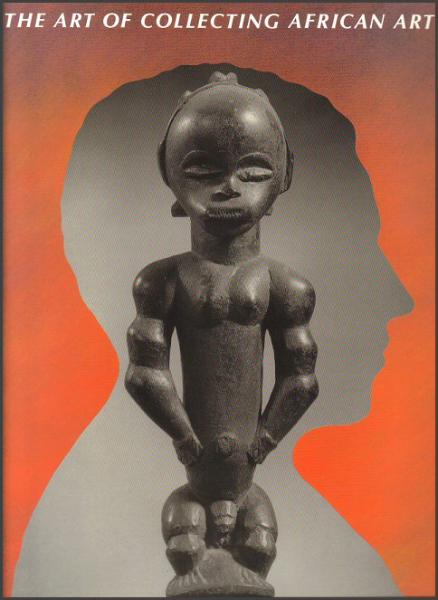
| Susan Vogel makes a wonderful and insightful introduction in the beginning of this book. Robert and Nancy Nooter each share their story in a brief essay about how they started collecting, and what drives their passion for African art. The introduction and the essays alone make the book worth it, but on the following pages it showcases the people that were part of the exhibition and it describes how they started collecting and gives examples from their collections that were in the exhibition. The winner of the FEBRUARY book drawing is: Veronique "Vero" Martelliere RAND |
| The FEBRUARY 2007 book was: "The Art of Collecting African Art" from the Center for African Art Introduction by Susan Vogel - Essays by Robert and Nancy Nooter Paperback: 64 pages. 49 black & white photographs. Catalogue of an exhibition. Publisher: Museum for African Art (May 1988) Language: English ISBN-10: 0961458798 Featuring objects and stories from the collections of: Ernst Anspach Arman John and Nicole Dintendass Jean and Noble Endicott George and Gail Feher Gaston T. deHavenon and Family Brian and Diane Leyden Daniel and Marian Malcom Franklin and Shirley Williams |

| Editorial Reviews Book Description African Forms: Art And Rituals illuminates an aspect of African art that has largely been neglected by other books. African sculptures and art are difficult to decipher because they are more than tokens of "art for art's sake." African art is based on religious and philosophical values. It is created not just for the patron but for the entire community, using a language of form for the society to understand what can't otherwise be put into words. Through an enlightening analysis of some of the continent's most emblematic artifacts, this book decodes African art by putting it in the context of the broader culture. It is thematically organized around key motifs to help you fully understand African art. With insightful text and stunning color photographs, African Forms: Art And Rituals is essential for art collectors and for all lovers of African art and culture. Hardcover: 200 pages Publisher: Assouline (October 2001) Language: English ISBN-10: 2843232910 ISBN-13: 978-2843232916 Product Dimensions: 11.4 x 9.7 x 1.2 inches The winner of the MARCH book drawing was: Peter Webb from Australia _____________________________________________________________________________________ |
| The book for the March 2007 book drawing was: African Forms: Art and Rituals, by Laure Meyer This book was kindly donated for the drawing by Dr. Jeffrey Geller |
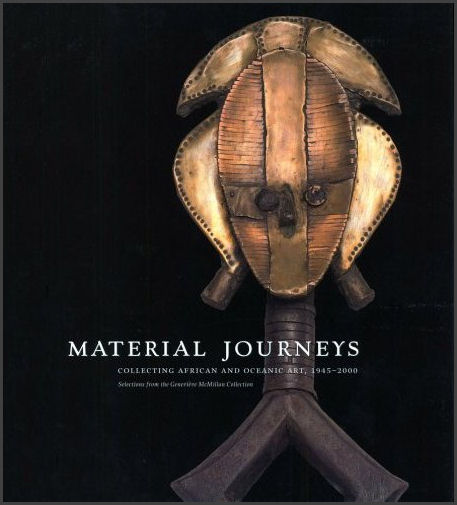
| While I was in Boston this month Bobbi Hamill set up a meeting with Christraud Geary who is the curator of African and Oceanic art at the Museum of Fine Arts, Boston. I had the opportunity to talk with her a little bit about the Boston MFA's African art collection and this new exhibition. I didn't have an opportunity to view the exhibition that this book is a companion to, but hope to do that once I move out to Boston in June. The exhibition runs from Monday, March 26, 2007 - Sunday, September 2, 2007. Before I talked to her I was not aware that the Boston MFA published a book that accompanied the exhibition. It's a wonderful book richly illustrated with great photos and lots of information. Below is some text from the Boston MFA website about the book and the exhibition: "This comprehensive study of how African and Oceanic arts were brought to Europe and the United States in the late twentieth century uses the esteemed Geneviève McMillan Collection as a prism to investigate collecting strategies as they intersect with the political conditions of colonialism and independence, and the developing study of African and Oceanic arts. The objects within include sculpture, textiles and musical instruments--some of which were collected in the field, others of which passed through hubs of the international art trade like Paris and Brussels, and still others of which arrived with African "runners," who helped locate objects for sale. As the market expanded, an increasing number of object types joined the canon of what constituted art, and artists in Africa and the Pacific began producing replicas and new types--opening a whole new debate about the objects' authenticity. This valuable tome explores this debate and the social, political and commercial forces underlying it." About the exhibition: "For over sixty years, Mrs. Geneviève McMillan, a Cambridge resident, has collected African and Oceanic art, a lifelong passion that began when she was student in Paris during World War II. The more than one hundred objects in this exhibition, ranging from sculptures to textiles to musical instruments, moved through many hands: some were collected in the field by their future owners (including Mrs. McMillan herself); others passed through Paris, Brussels, and New York, hubs of the international art trade; and still others arrived directly in Cambridge with African merchants who helped locate objects for sale. African objects featured in this exhibition include an ancient reliquary figure made by artists of the Kota peoples in Gabon, two important masks from the Yaka peoples in the Democratic Republic of the Congo, and a terracotta vessel from the Asante peoples in Ghana. Among the works from Oceania are a bark cloth mask from the Baining peoples who live on island of New Britain, and a model boat from the Solomon Islands. This exhibition highlights not only the beauty and function of these works, but also traces their voyages and focuses on the social, political, and commercial forces that accompanied collecting in the second half of the twentieth century. In considering these issues, the exhibition evokes the choices of a pioneering collector and casts light on the more general processes of producing, interpreting, and collecting African and Oceanic artworks in the modern world. It also celebrates Mrs. McMillan's generous gift of the works on display and many others to the Museum." Book information: Softcover. 9" x 10". 250 pages. 120 color and 35 black and white illustrations. The winner of the APRIL book drawing was: Paul Nieuwenhuysen from Belgium CHEERS! RAND |
| The book for the APRIL 2007 book drawing was: Material Journeys: Collecting African And Oceanic Art, 1945-2000 Selections from the Geneviève McMillan Collection Essays by Christraud M. Geary and Stephanie Xatart This book was kindly donated for the drawing by Bobbi and Tim Hamill (Hamill Gallery Boston) |
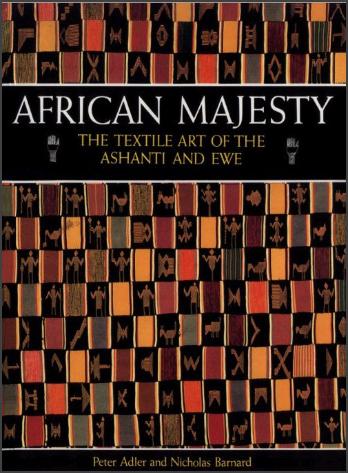
| BELOW ARE THE BOOKS FROM THE PREVIOUS BOOK DRAWINGS THIS YEAR MAY and JUNE book drawing With the preparations for my move to Boston and everything else going on in May I didn't get around to doing a book drawing in May. Now it's already the 24th of June and I haven't done a book drawing in June yet either so I thought I'd just do both of them at once. Life has been a roller coaster the past couple of months, well, actually more than the past couple of months, but especially the past couple of months. May was a busy month filled with packing, more packing, and then more packing. Mixed in was a going away party and trying to see friends and relatives before I left Denver at the end of the month. I arrived in Boston, after a 10 day trip to Europe and a 3 day long drive across the US, in the middle of June and I'm just starting to get back on top of things again and I thought I'd start off with getting caught up on the book drawings from the past 2 months. When I was in Europe I got to visit the Tropenmuseum in Amsterdam and attended BRUNEAF (Brussels non European Art Fair) as well as go to the Mestach exhibition in Brussels. I took hundreds of photos in total and as soon as I get a little more caught up I'll share them with people on my website. The books for the combined May/June book drawings are: "Crowning Achievements: African Arts of Dressing the Head" by Peter Adler and Nicholas Barnard (Paperback - Oct 1995) and "African Majesty: The Textile Art of the Ashanti and Ewe" by Mary Jo Arnoldi, Christine Mullen Kreamer, Christine Mullen Kreamer, and Los Angeles Fowler Museum of Cultural history - University of California (Paperback - Jan 1995) *Both of these books were kindly donated for the drawings by Bobbi and Tim Hamill (Hamill Gallery of African Art - Boston) Actually Bobbi and Tim made a very nice donation of several different books that will support the book drawings through the end of the year. I sincerely appreciate this nice and generous gesture on their part. |
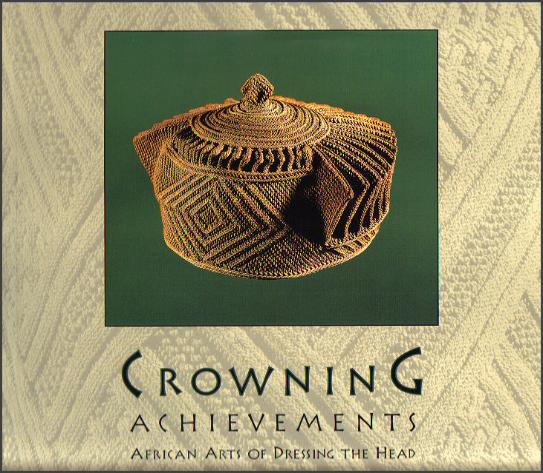
| Crowning Achievements: African Arts of Dressing the Head Paperback: 192 pages Publisher: University of California Los Angeles, Fowler (January 1995) Language: English ISBN-10: 0930741439 ISBN-13: 978-0930741433 Product Dimensions: 10.2 x 9.7 x 0.6 inches Shipping Weight: 2.2 pounds It's a fascinating book! I recently had the pleasure of going to the exhibition "Headdresses" at the Tervuren Museum outside of Brussels. It was a great exhibition and very educational for me since I know very little about headdresses from various cultures. The exhibition was accompanied by a catalog but to be honest with you I really enjoyed the book "Crowning Achievements" much better than the book that accompanied the Tervuren Museum exhibition. Both the exhibition at the Tervuren Museum and the Crowning Achievements book have inspired a new passion for African headdresses for me! |
| African Majesty: The Textile Art of the Ashanti and Ewe Paperback: 192 pages Publisher: Thames & Hudson; Reprint edition (October 1995) Language: English ISBN-10: 050027844X ISBN-13: 978-0500278444 Product Dimensions: 12.1 x 9.1 x 0.8 inches Shipping Weight: 2.4 pounds Review below by Marie Waterman (West Virginia) "African Majesty is the historical study of the weaving practiced by two separate West African tribes. Inhabiting the present day countries of Ghana and Togo, the weaving traditions of the Ashanti and Ewe have been traced from the writings of the European explorers of the 15th century. Their seemingly simple process is called "strip weaving". Strip weaving is the art of hand weaving narrow(3"-5")strips which are later hand sewn together into larger pieces to make the wearing cloth of both men and women. Intensely laborious but extremely portable, these combined strips are referred to in the West as "kente" cloth, a mixture of color and pattern which has been imitated in fabric prints. The team of Adler and Barnard, a textile scholar and a writer, has produced a magnificent collaboration which showcases this art. 131 color illustrations,including many full page plates, reveal the native use of intricate patterning and a wide range of colors. Each example is numbered and the patterns contained therein are named by their tribal name, translation, explanation of uses by particular segments of society and their place of origin. The pictured cloths are really incredible. Before reading this book I had dismissed this type of cloth as a hodgepodge of simple plain weave thrown together like a crazy quilt. Seeing the multitude of patterns and reading about the fine silk and cotton yarns employed has given me an appreciation for this painstaking craft. Barnard and Adler have compiled a wonderful book, enhanced by maps of the region, a glossary of African terms and a bibliography. Though even in the face of Western influence the simple everyday strip cloth material continues to be purchased and worn, it is the specially commissioned designs which are disappearing. Hopefully this book will attract a wide audience and stimulate demand by private collectors for this awesome handweaving. " You can also see inside the book on Amazon.com's page for this book by CLICKING HERE, then click on the 'look inside this book' link. |
WINNERS OF THE MAY/JUNE BOOK DRAWING: The winner of the book directly below is: Robert Fielder (http://fiedlertribalart.com/) "Crowning Achievements: African Arts of Dressing the Head" by Peter Adler and Nicholas Barnard (Paperback - Oct 1995) and The winner of the book directly below is: Javier Sandoval, Spain "African Majesty: The Textile Art of the Ashanti and Ewe" by Mary Jo Arnoldi, Christine Mullen Kreamer, Christine Mullen Kreamer, and Los Angeles Fowler Museum of Cultural history - University of California (Paperback - Jan 1995) Cheers! RAND |

| Marla C. Berns, Allen F. Roberts, Mary Nooter Roberts and Doran H. Ross, Editors "African Arts is devoted to the plastic and graphic arts of Africa, broadly defined to encompass sculpture in wood, metal, ceramic, ivory, and stone, and less familiar work in fiber, hide, mud, and other materials. Included in this mandate are architecture, arts of personal adornment, contemporary fine and popular arts, and the arts of the Africa diaspora." African Arts is published quarterly by the James S. Coleman African Studies Center, UCLA, and distributed by The MIT Press. |
| African Arts publication turns 40 this year and so do I this month on July 19th. Coincidence? Well, even if it is some strange coincidence, I thought it was a perfect opportunity to give away a 1 year subscription to this wonderful publication. When I first started collecting and tried to learn about African art I had a select few books that I started out with to learn from. In the library of my old mentor was an encyclopedic collection of African Arts publications and once I found out about them I would put them all on the floor and go through them one by one finding all of the ones with articles that were interesting to me at the time. Each time I would do this there were articles that I revisited and ones that I hadn't looked at previously that now grabbed my attention. Over the years I have built up my own fairly encyclopedic collection (still missing a few issues) of African Arts publications and just about once a month I'll get them all out, set them on the floor and go through every one of them looking for articles that interest me now or go through my index of the articles to locate a specific issue that has an article on a specific topic I'm trying to research at the time. They continue to be a great resource for me and I'm sure will continue to be one for the future as they continue to publish articles that are culture and object specific as well as venturing into the current and future state of African art. In the first quarterly issue of 2007 (Spring 2007, Vol. 40, No. 1, Pages 1-5), Herbert M. Cole wrote a very nice article entitled "Forty Years of African Arts" and below is an excerpt from the first paragraph of the article. Forty Years of African Arts by Herbert M. Cole "Celebrate African Arts, now entering into its fortieth year! Launched ambitiously in 1967, pledging a bilingual survey of all the traditional and contemporary arts—sculpture, painting, architecture, poetry and other literature, theater, and dance—it made good on the French/English promise for only three years, yet continued its broad arts coverage into the 1970s. The coverage of nonvisual arts became sporadic between 1975 and 1978, with only occasional articles on them thereafter. Since the late 1970s, though, this journal has covered a plethora of African and Africa-related subjects within the broad purview of visual, performance, and ritual culture: archaeological, early, modern, and contemporary. In fact, it has served to chronicle, in substantial detail and oft en with fine color illustrations, the progress as well as the state of the African arts field since the late 1960s. Thirty-nine volumes comprising 156 issues stretch to nearly four feet of shelf space as I write. Other statistics tell more: 19,565 photographs (including objects in advertisements) 1,092 articles 624 books reviewed 468 exhibitions reviewed 16 private US collections highlighted 54 museum collections showcased 35 special issues on a single topic, 7 more as tributes" The article continues for a total of 5 pages and below is the end of the article... "In the years since this publication first appeared in 1967 we have learned that change in African arts, plus invention and creativity, are all endemic and vital, and that they always have been. It is up to the readers of African Arts to ensure that it will survive to chronicle what is now and continues to be happening, and changing, in the arts of the vast African continent (and its diasporas), as well as to examine critically earlier art forms and the writing on them." Herbert M. Cole Herbert Cole is emeritus professor of art history at UC Santa Barbara. His major publications include Icons: Ideals and Power in the Art of Africa, 1989; Igbo Arts: Community and Cosmos, 1984 (with C.C. Aniakor) and The Arts of Ghana (with Doran H. Ross), 1977 _____________________________________ **CLICK HERE to enter the drawing for the 1 year subscription to AFRICAN ARTS** or send me an email - rand@discoverafricanart.com with a subject of "African Arts drawing" I will do the drawings for the subscription on Monday August 20th and announce the winners in the African Arts and Culture online discussion group and also on my website. Cheers! RAND |