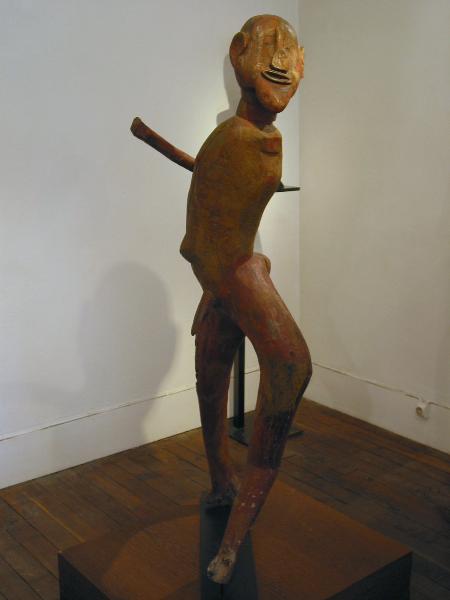
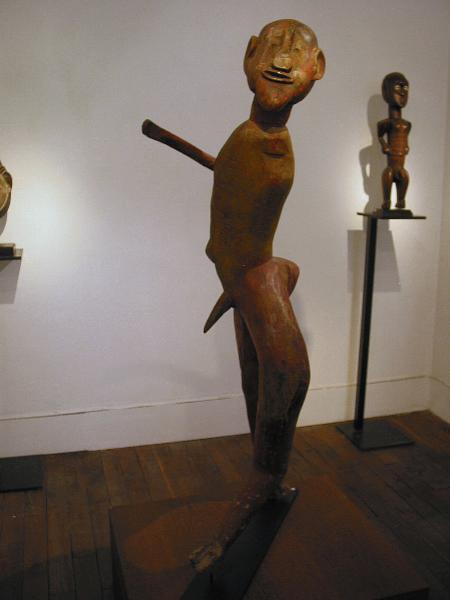
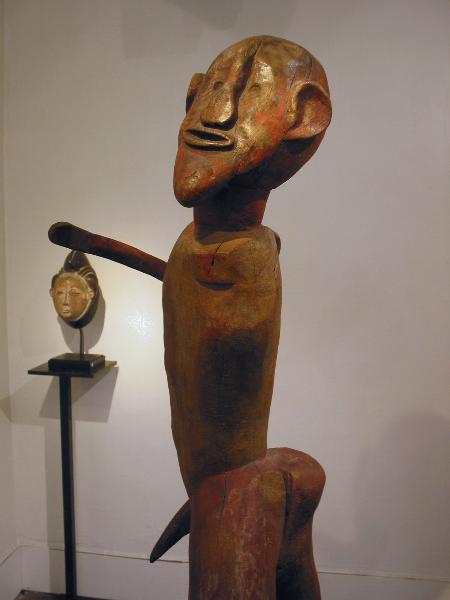
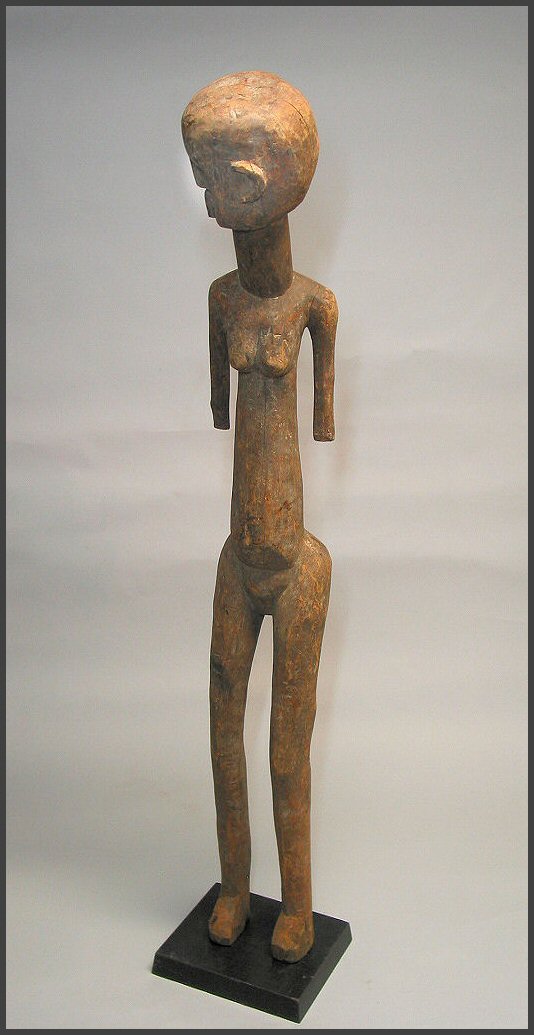
| Sukuma figure from Tanzania |
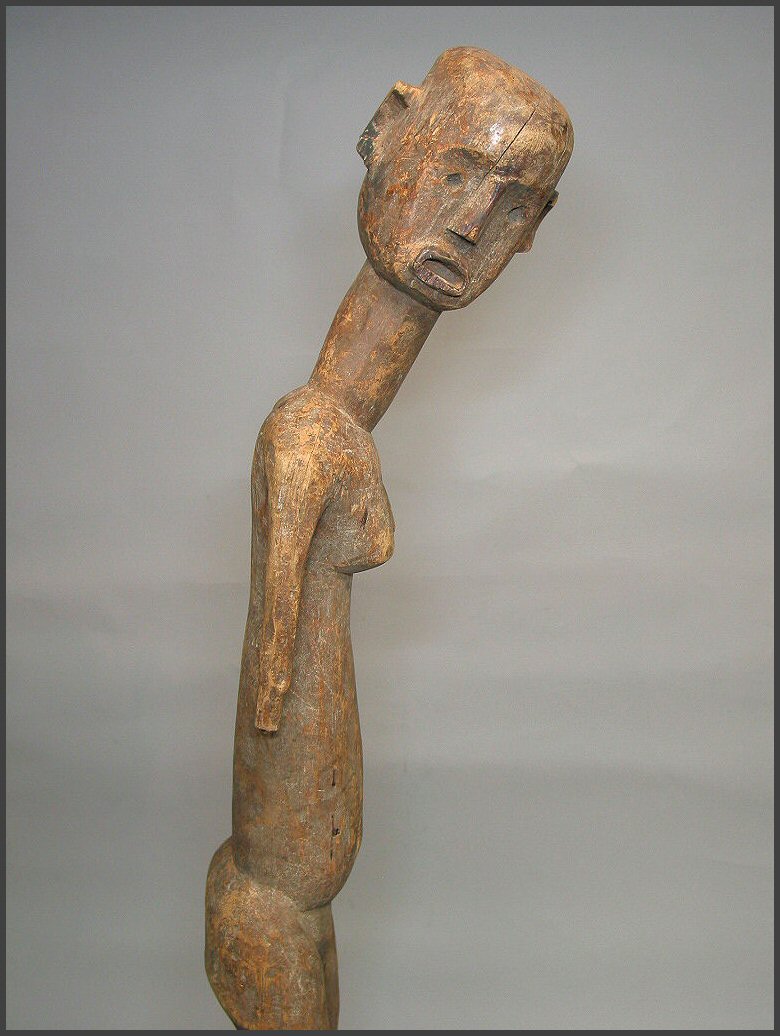
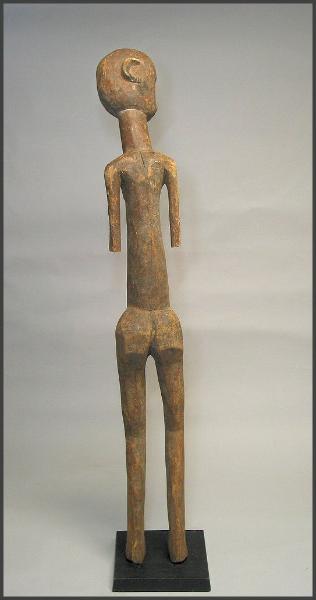
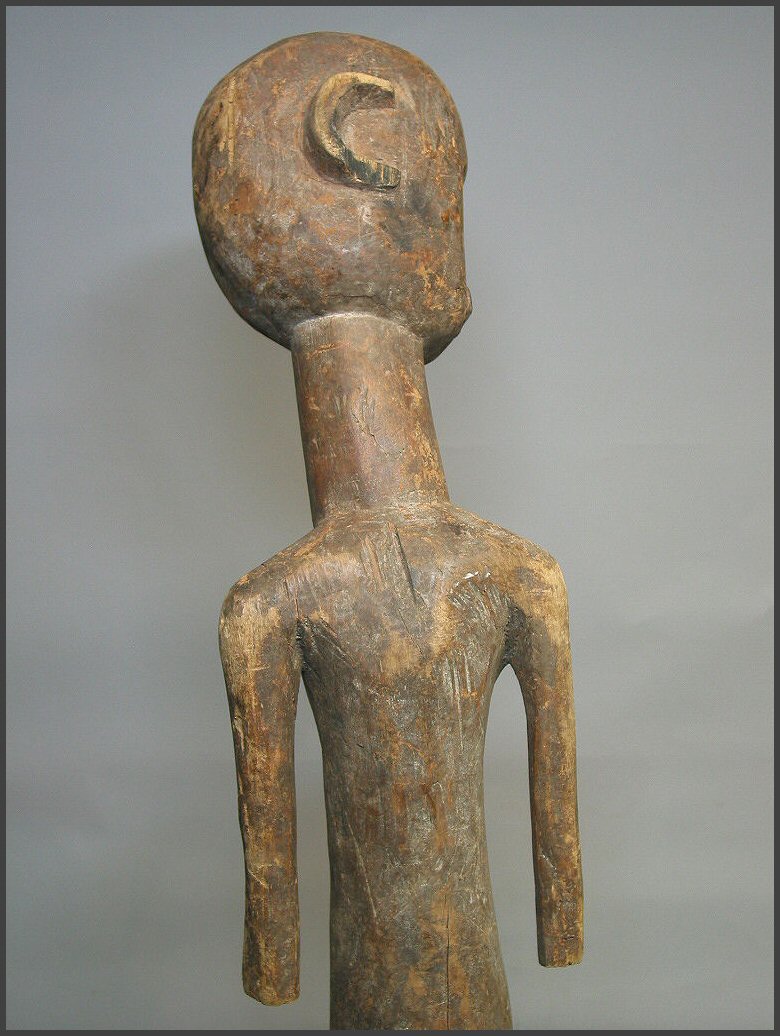
| 4 feet 10 inches tall (58") Haya (?) Sukuma (?), or neighboring people, Tanzania Use/function unknown _______________________ "The Sukuma people are a comparatively large tribe and number approximately one million. They live in small villages in the northern part of Tanzania, each of which is headed by a chief who is also a sorcerer and whose power is counterbalanced by secret societies. Sukuma carvers are associated with large, rough-looking, standing figures, which have a weathered patina. In some instances these statues were made either with articulated limbs or were carved without any arms and legs at all. The later figures may have been used as scarecrows and the figures carved with articulated limbs, known as Amaleba, are used by musicians and dancers during ceremonies in the dry season, following the harvest. Another type of tall, carved figure, to which fetish material is attached, is thought to represent an ancestor. Sukuma masks have a fearful expression, exaggerated features, including applied eyebrows, and a beard and moustache, and, like their statues, have a weathered patina. In common with the Amabela, Sukuma masks were also employed during dance ceremonies in the dry season. Steatopygous terracotta figures with a small head and hands resting on their hips and long ivory necklaces were also made by Sukuma craftsmen." Source: The Tribal Arts of Africa Additional online resource on the Sukuma: Sukuma Culture and Tanzania by Mark H.C. Bessire The Sukuma Museum website Click on any image to see larger version |
| Map above showing the concentration of different ethnic groups in Tanzania. The Haya and Sukuma are in the upper left hand side. You can click on the map to see a larger version. |
| Rand African Art home page Sukuma figures main page Tanzanian figures main page Sukuma figures, boundaries, and the arousal of spectacle African Arts, Spring, 2005 by Aimee Bessire Click on the link above to go to the article in Look Smart Sukuma dance figures at the Hamill Gallery |

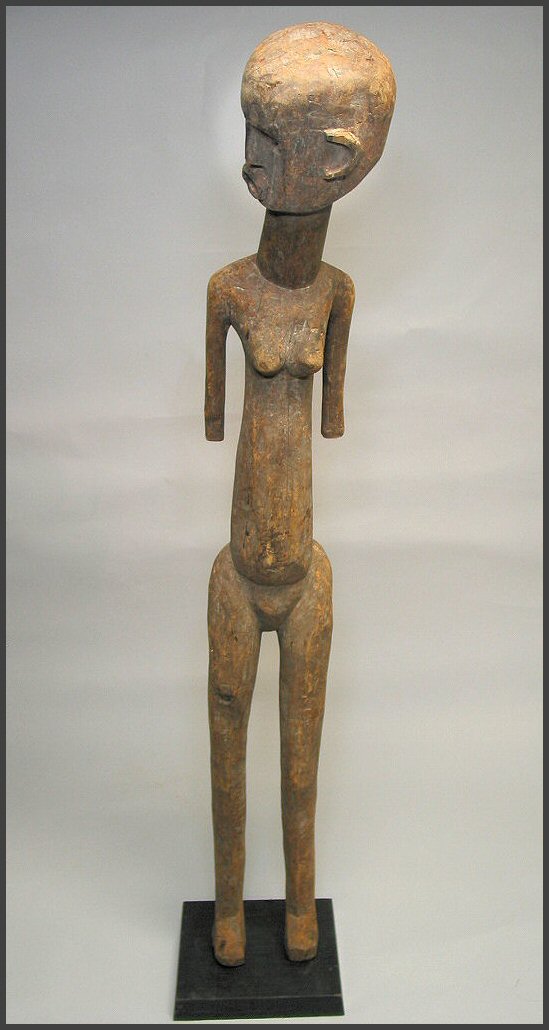

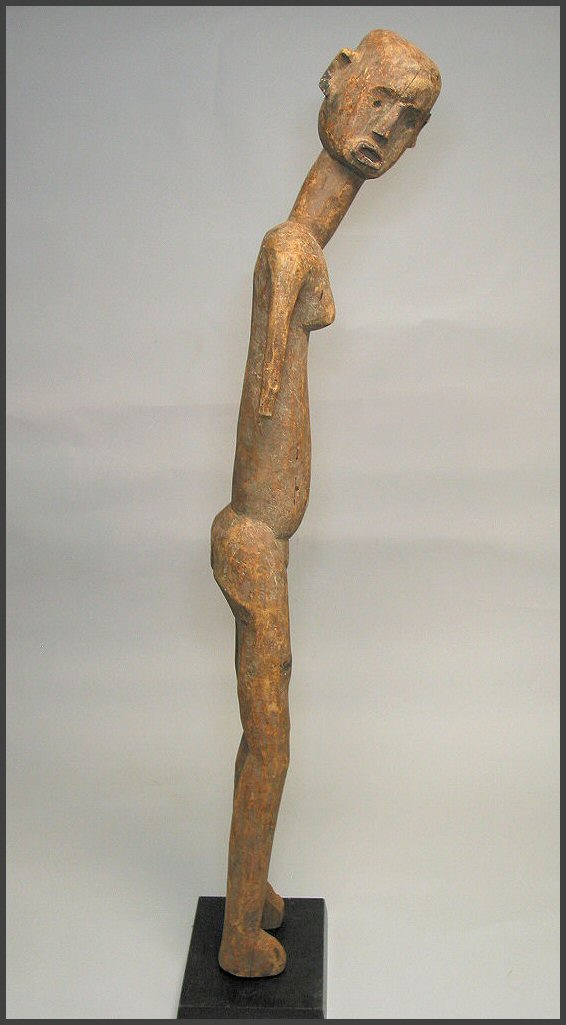


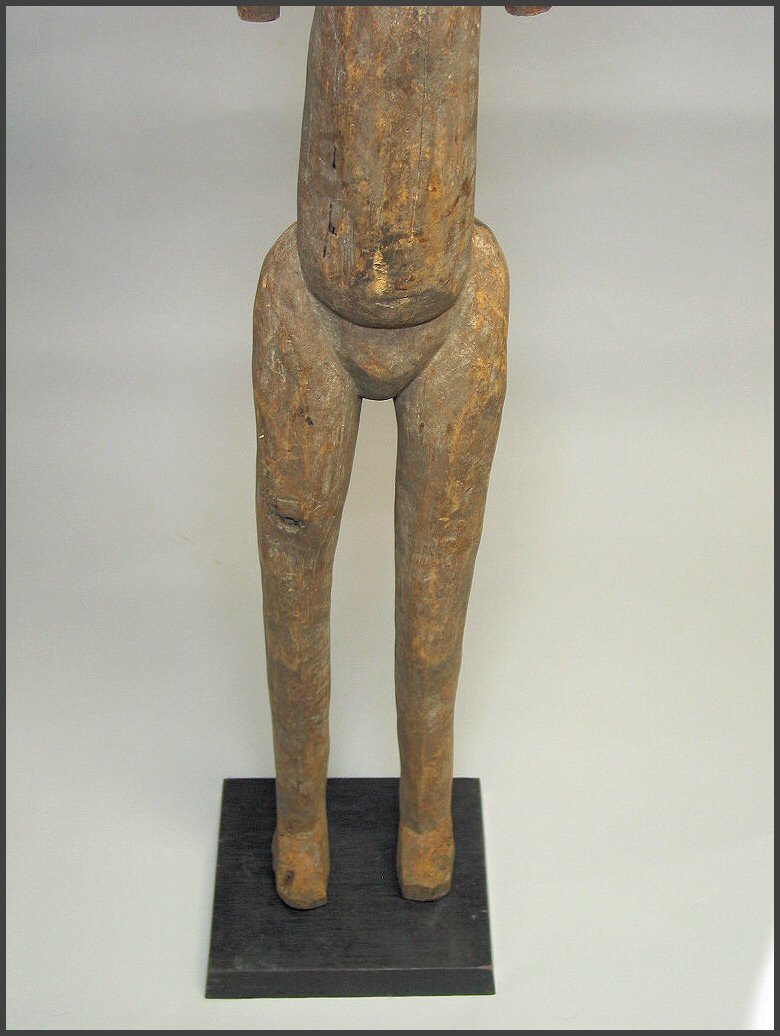
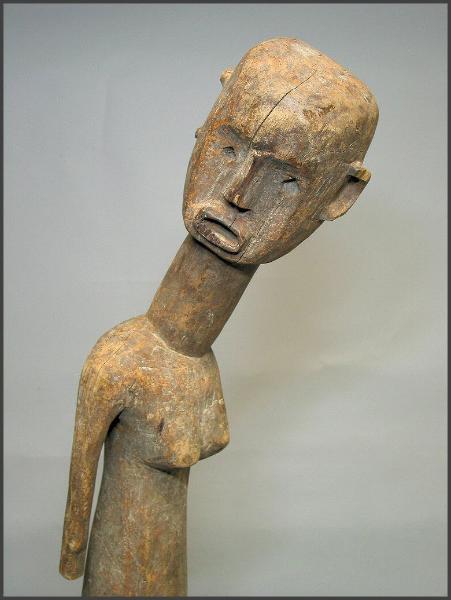


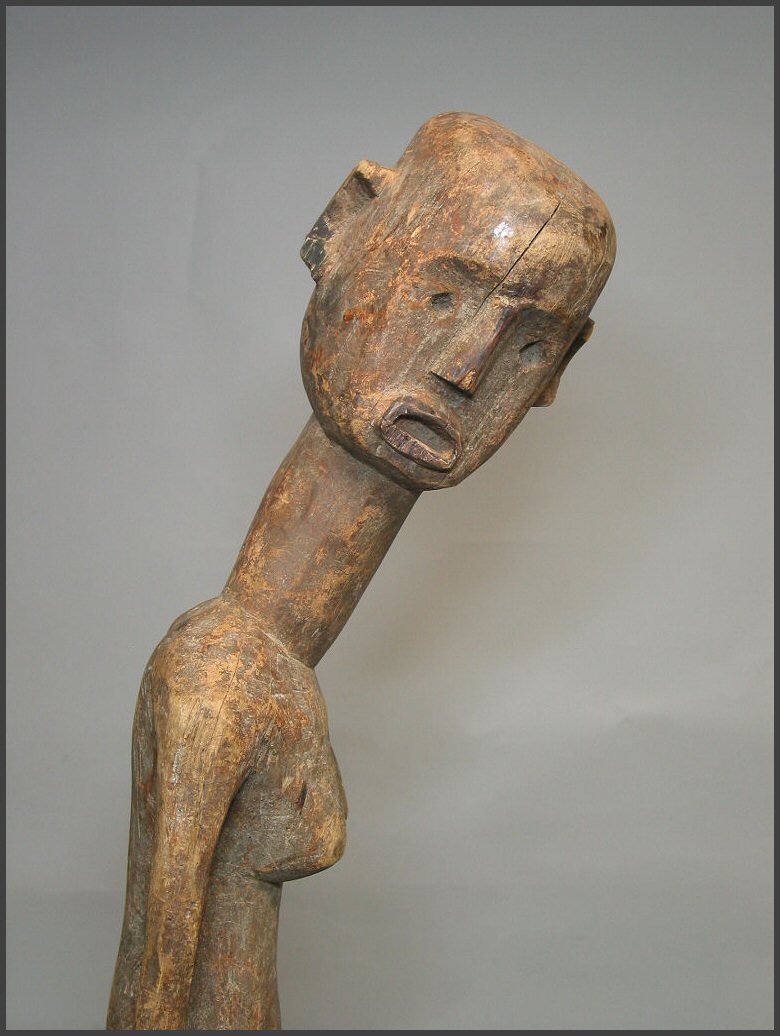
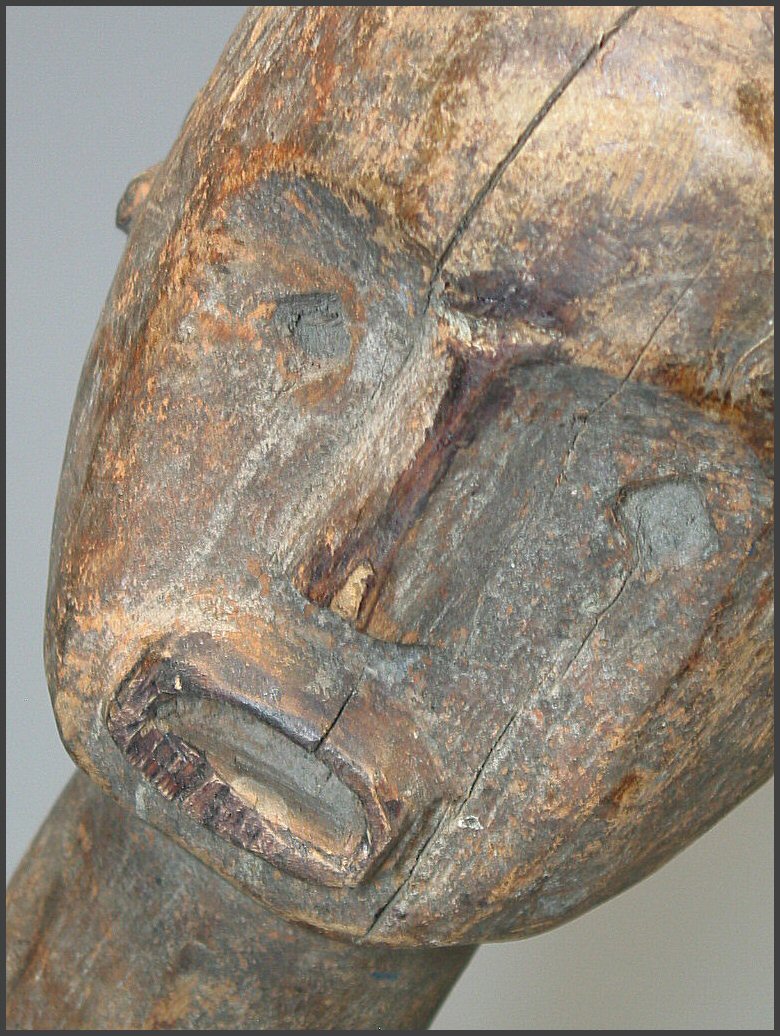
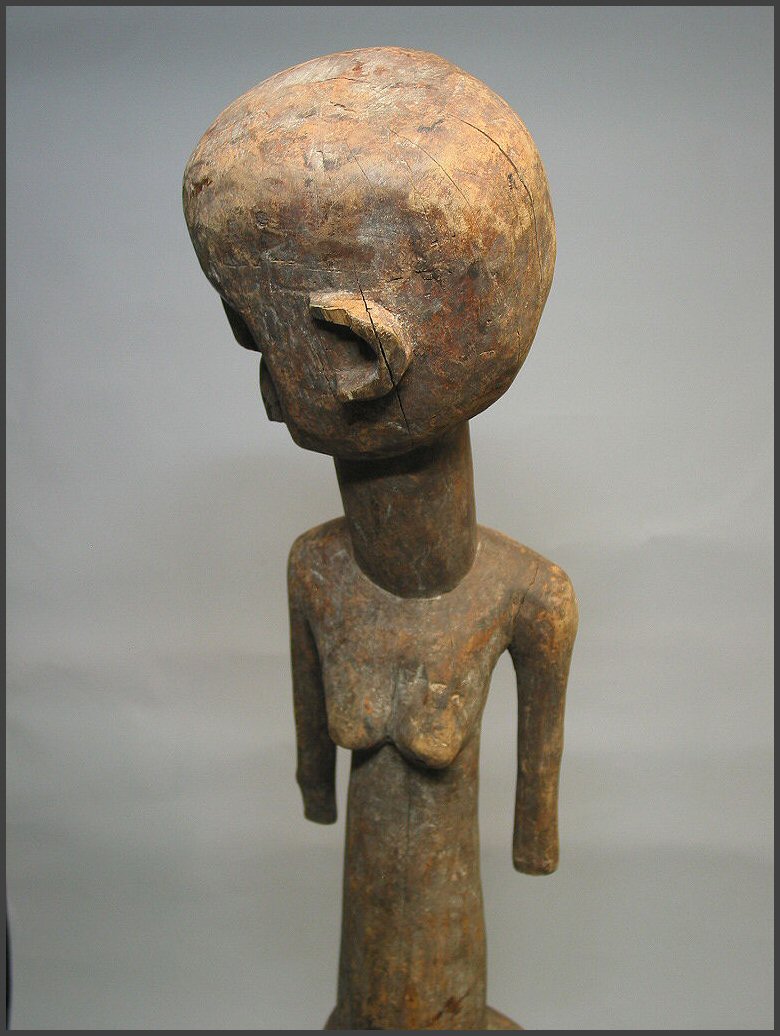
| The pose of this figure is very unusual with the neck bent forward and the head turned to the side like it is. One thing that I discovered, only while taking photos of this object, were 2 lines of pigment that ran down from each eye, almost representing tears running down someone's face. It's more visible in some of the photos than others. I don't know if this was originally, purposely done this way, or something that just happened, but my thoughts are that it was intentional because of the tilt and angle of the head. If it was something that just happened, then the lines would have run at a different angle because of the tilt, so that makes me think it was intentional. It really gives this object a much more powerful and mysterious appeal to me. |



| The objects below are not in my collection they are for reference purposes only |
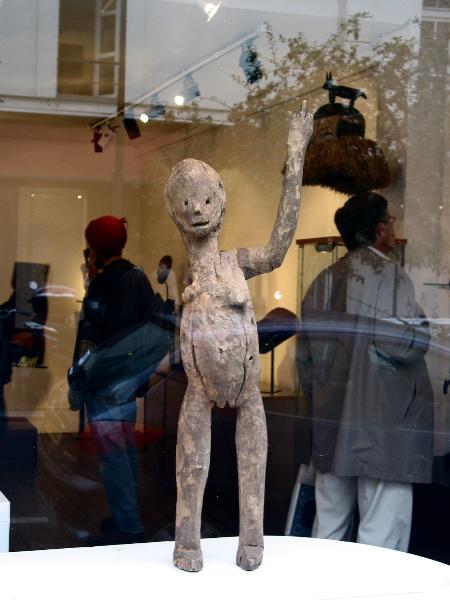
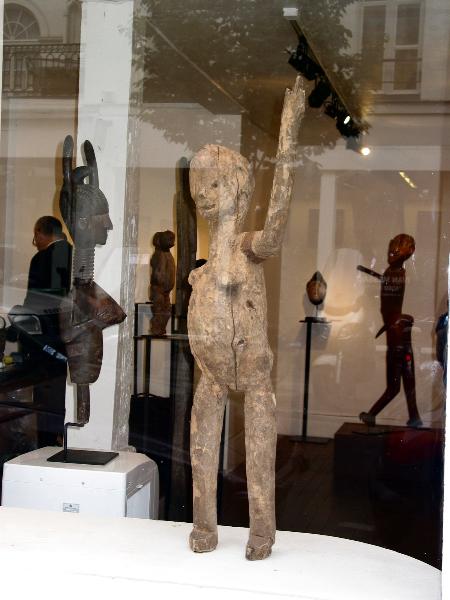
| A Sukuma figure in the window of a gallery in the 2006 Parcours des mondes show. I loved the expression, and also the hand gesture. Below are the photos of the Sukuma figure that I loved from the same gallery. I talked to the gallery owner and he said that figures such as this were placed in fields to protect the crops, sort of how we use "scarecrow" figures. He was missing an arm, which was unfortunate, but it was still a very interesting figure, at least to me. He explained that my Sukuma figure probably/possibly had the same purpose. |