| Makonde maternity figure - Mozambique |
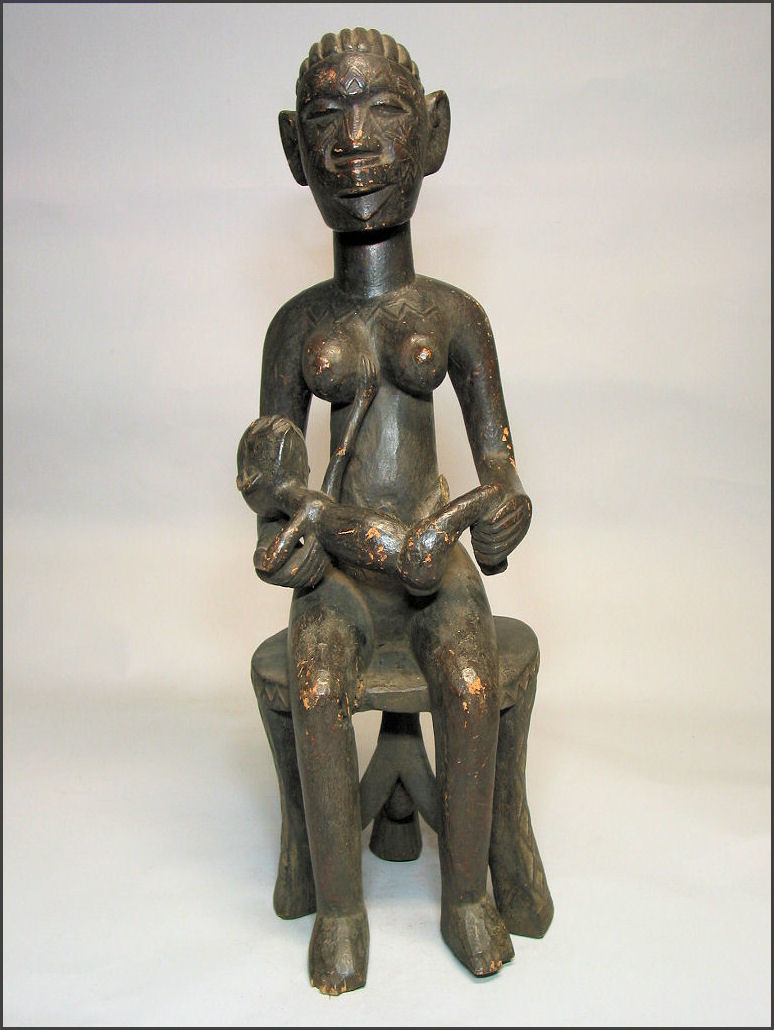
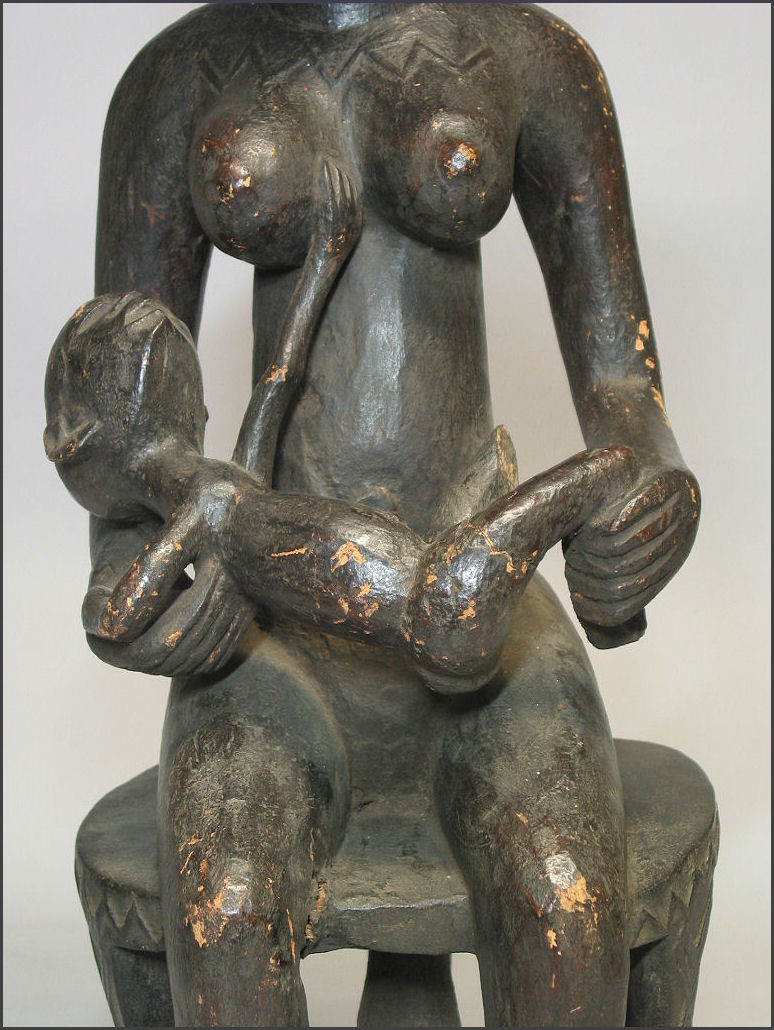
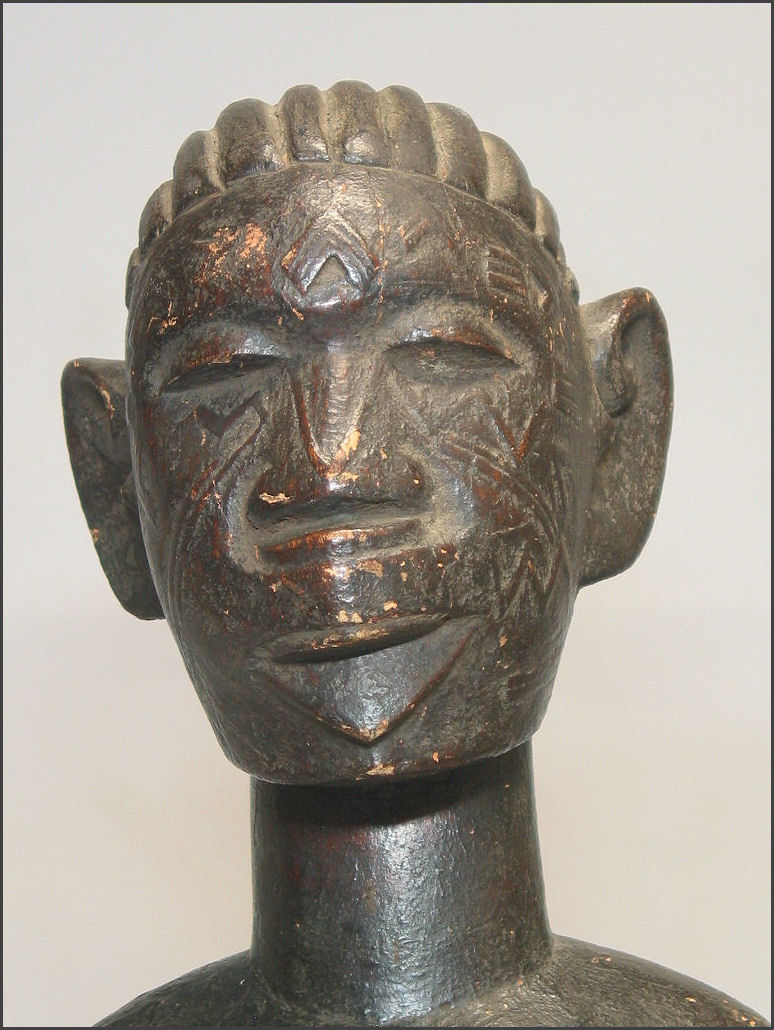
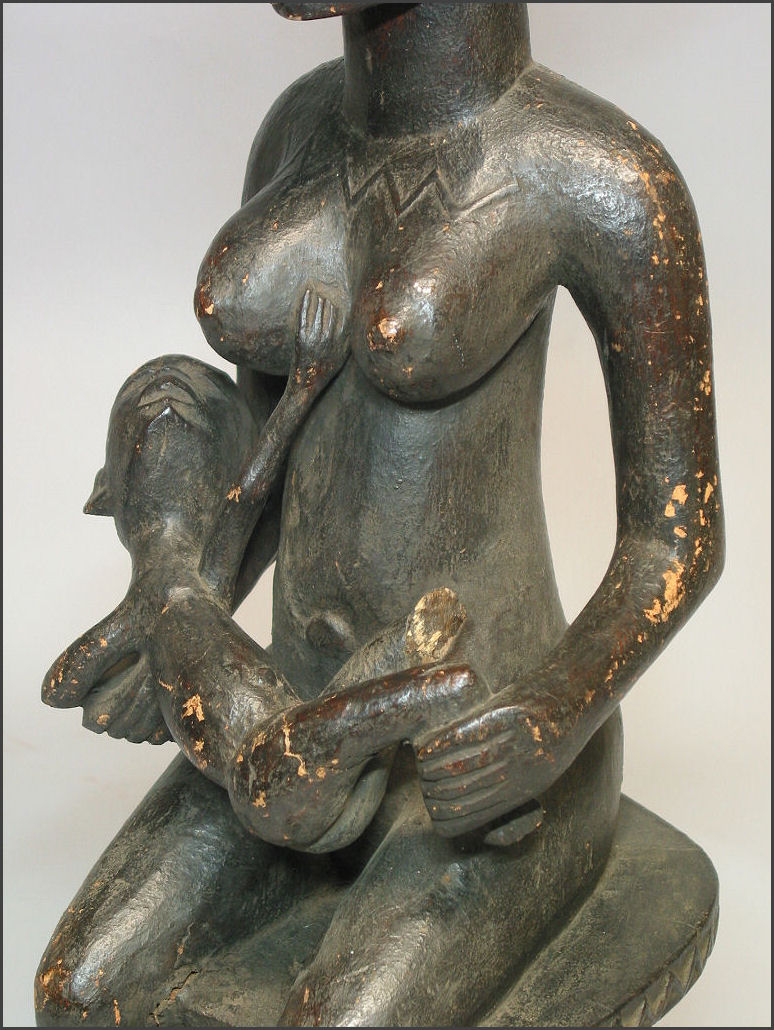
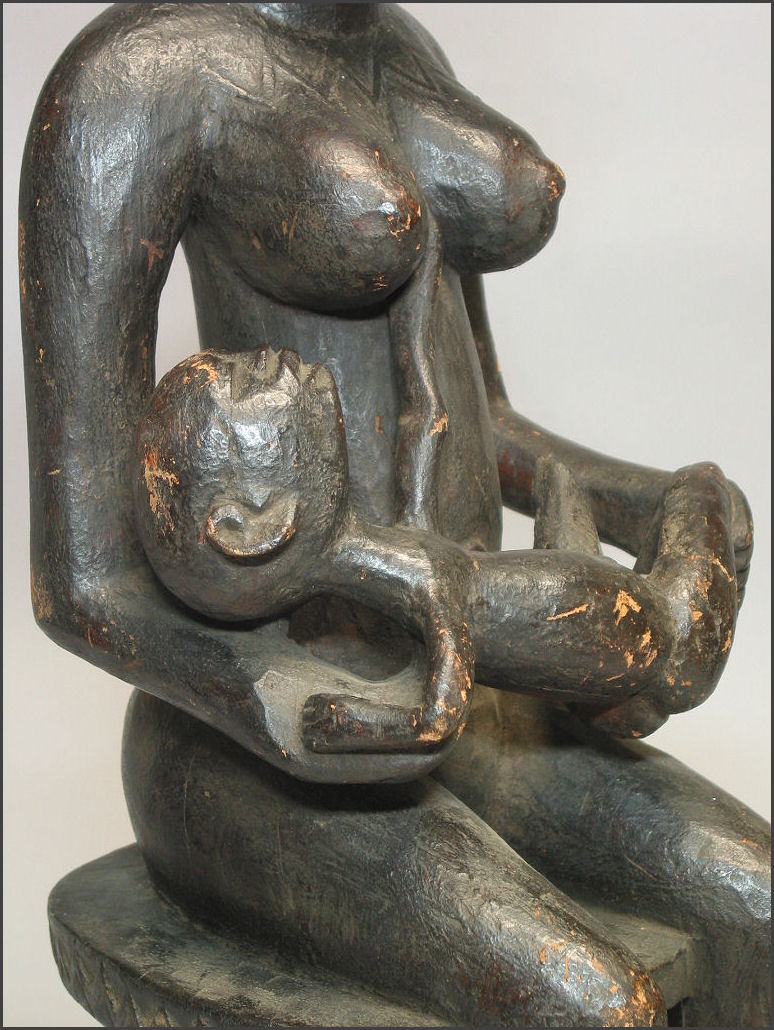
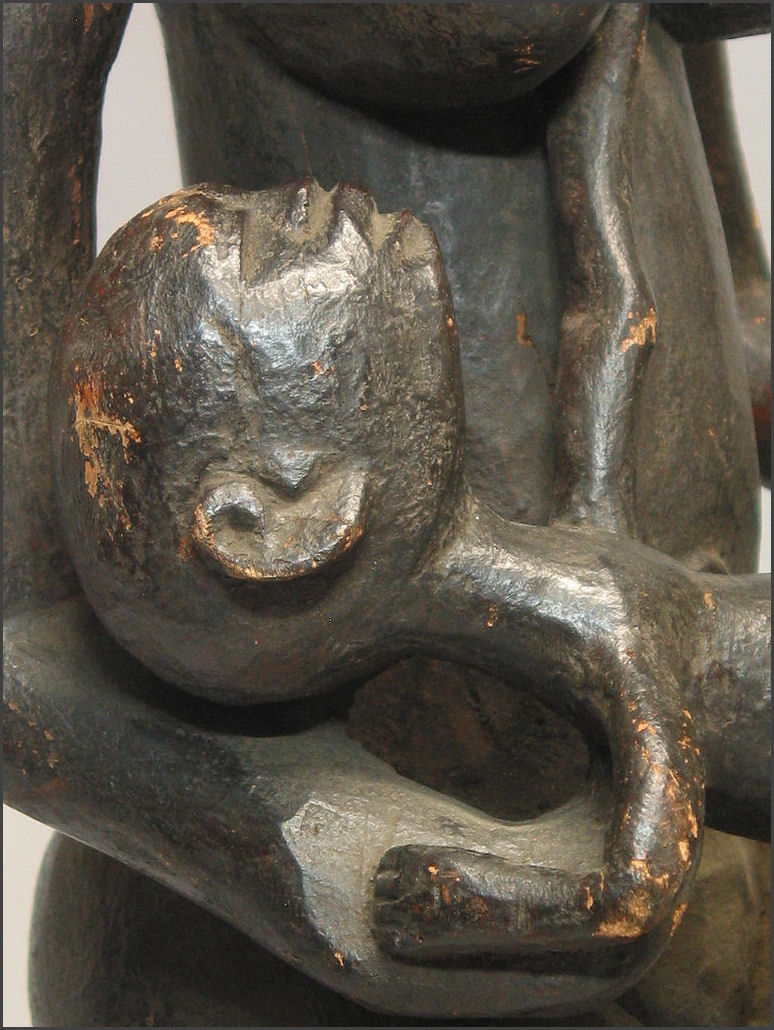
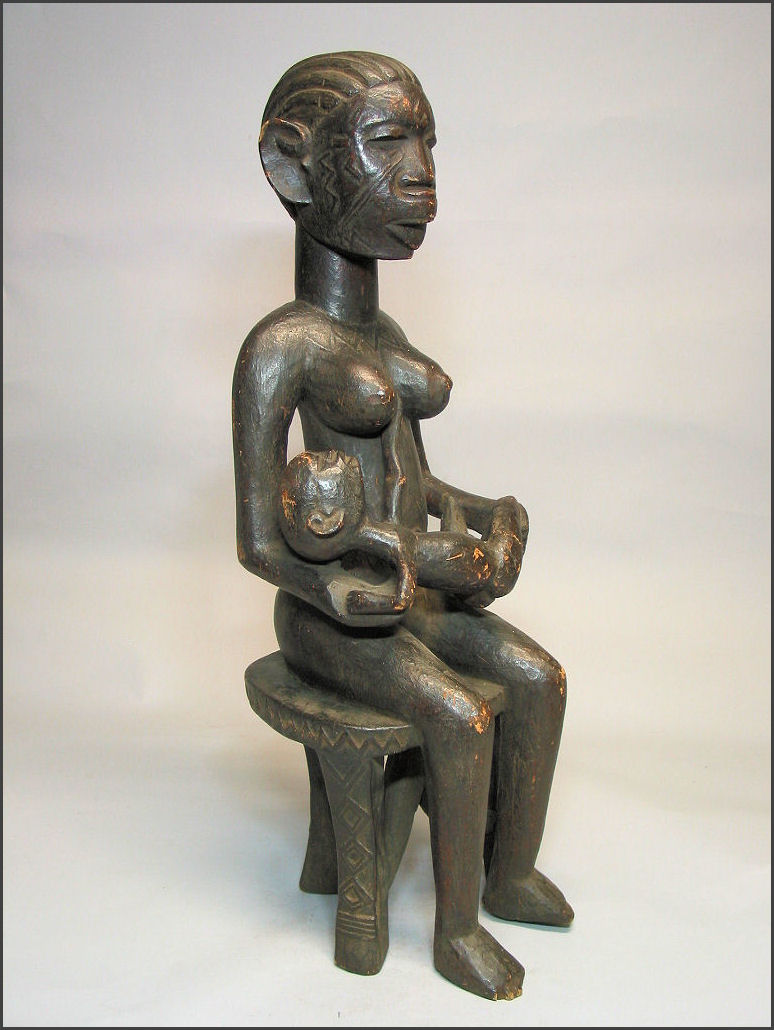
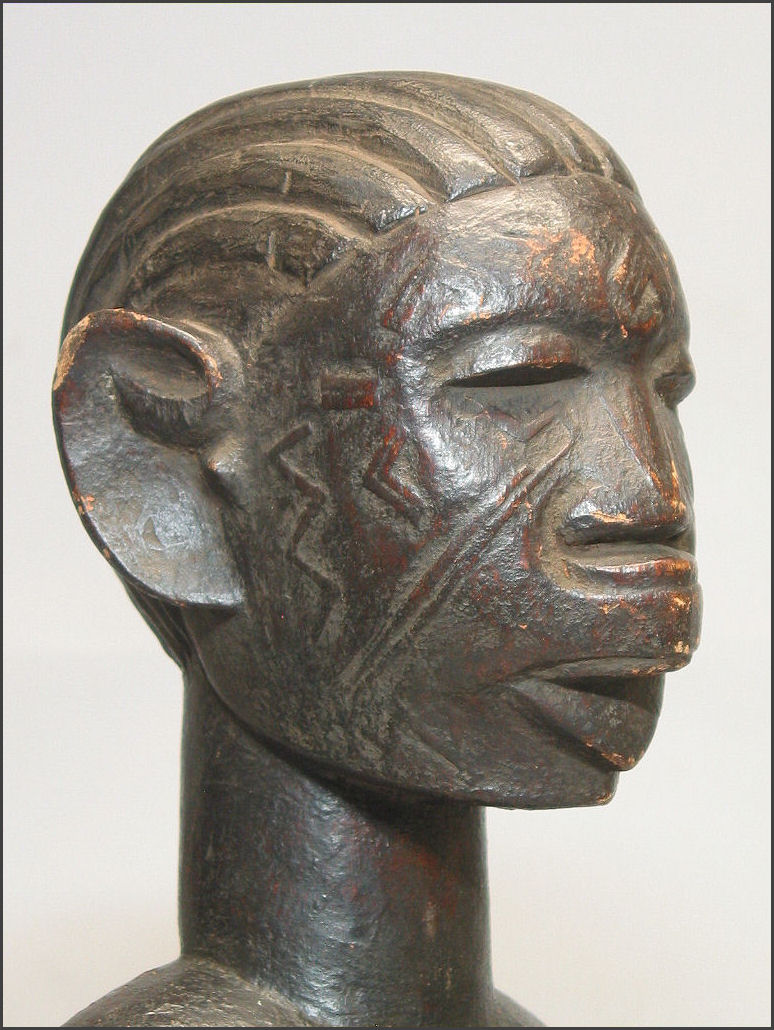
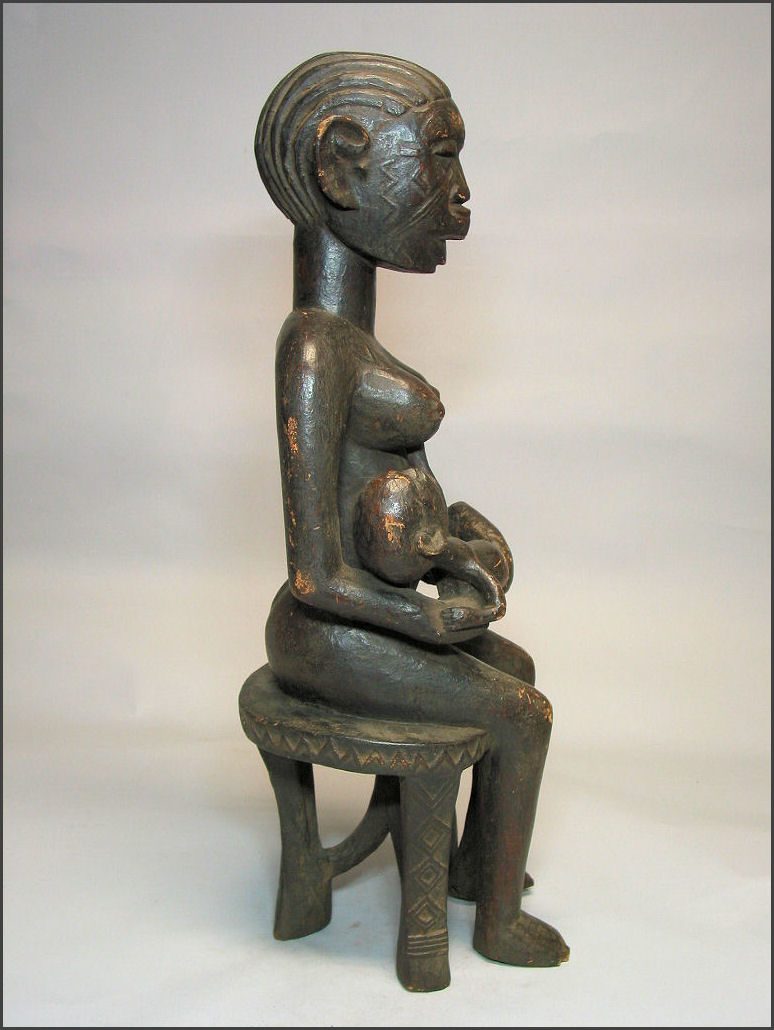
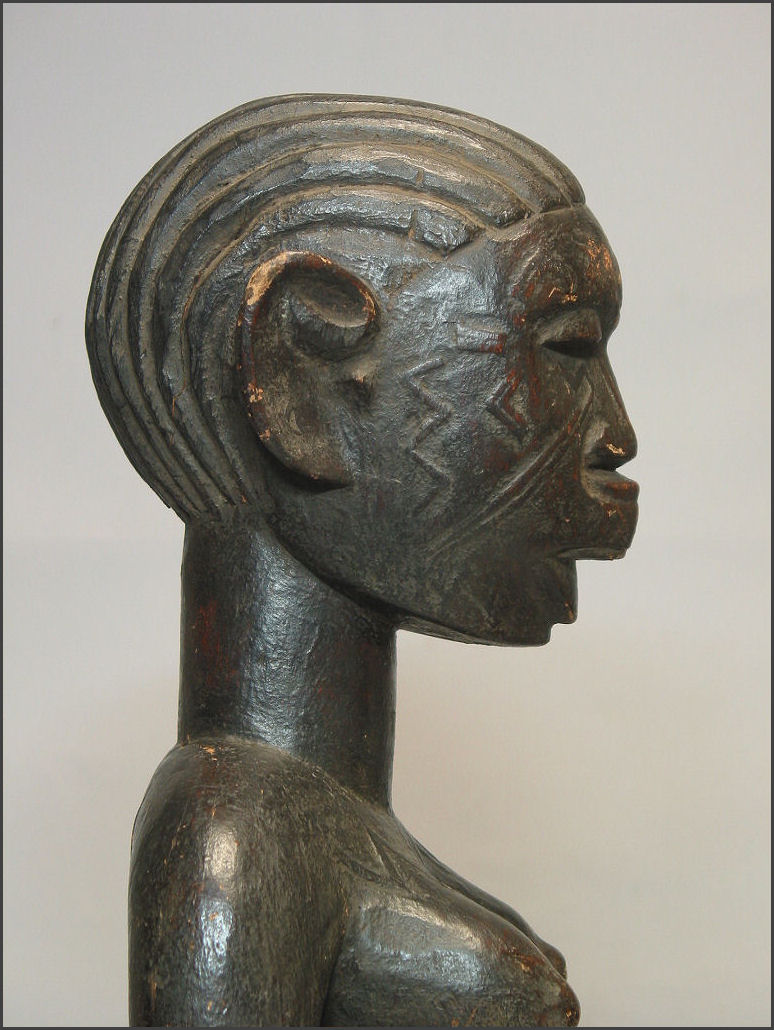
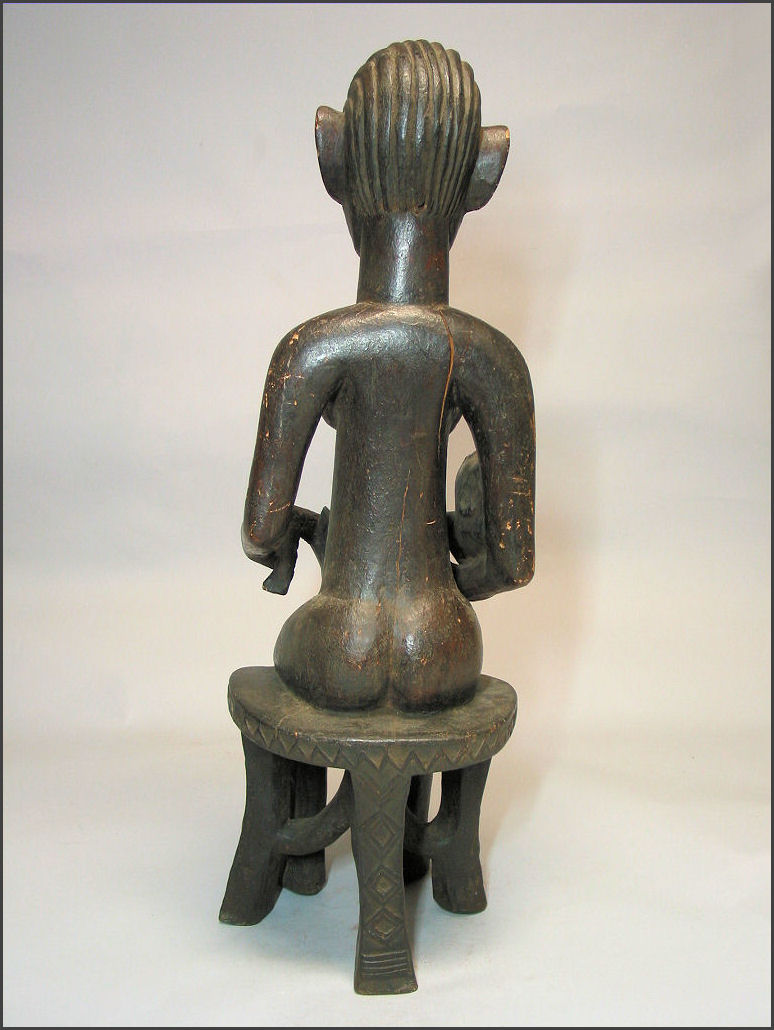
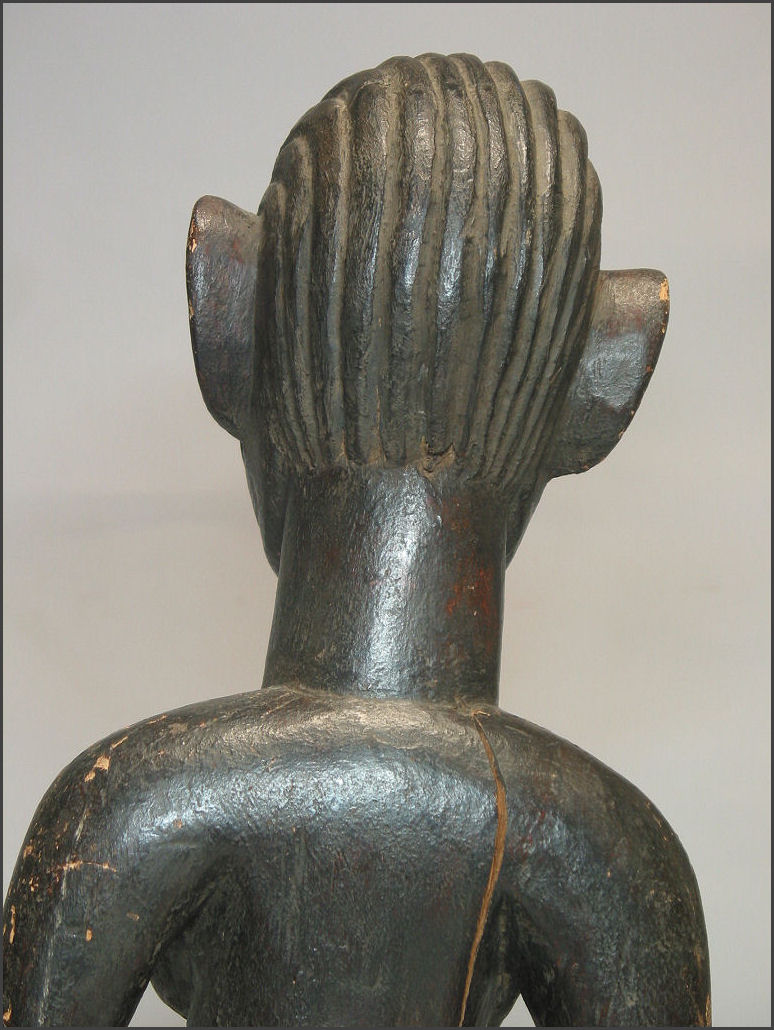
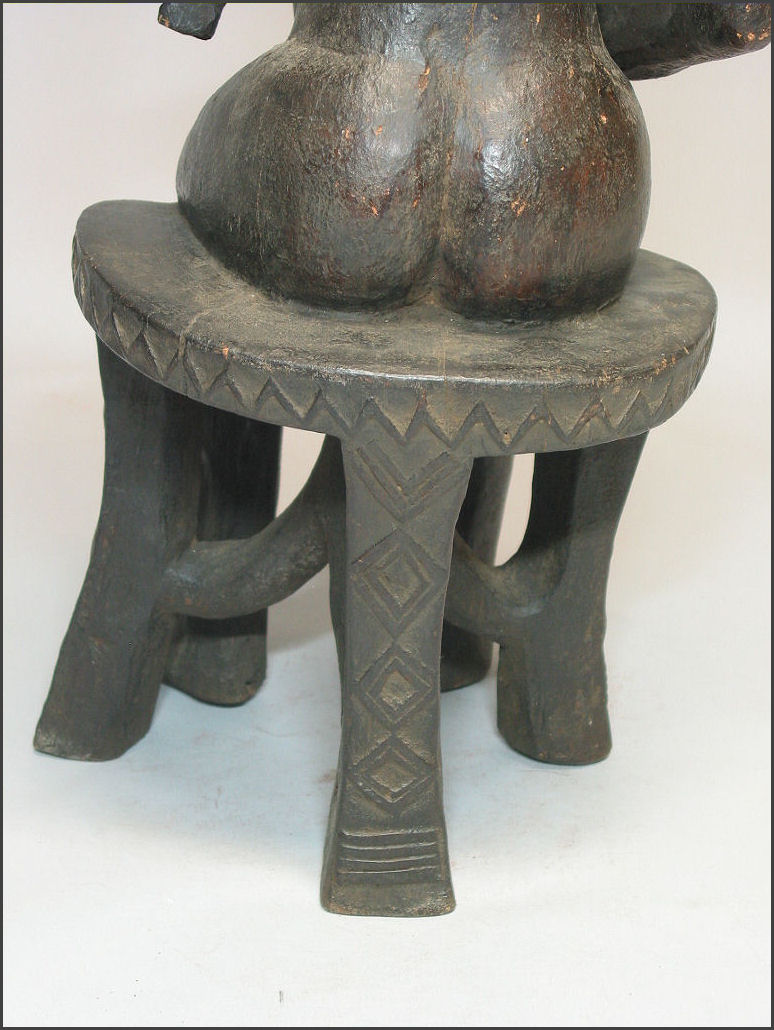
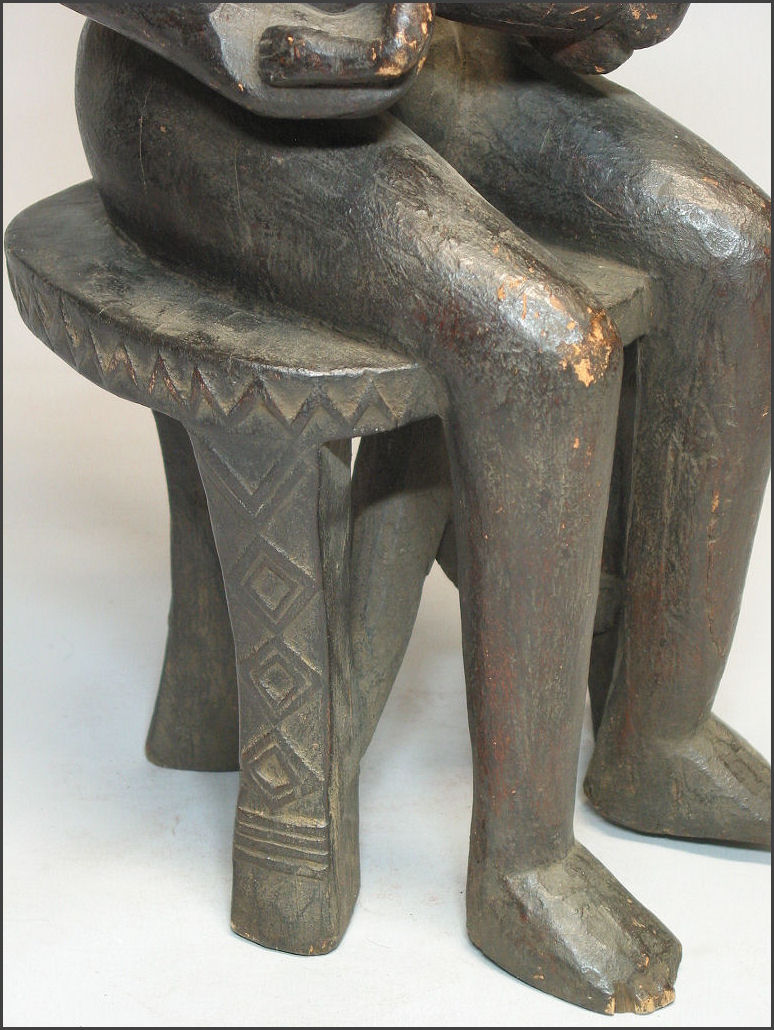
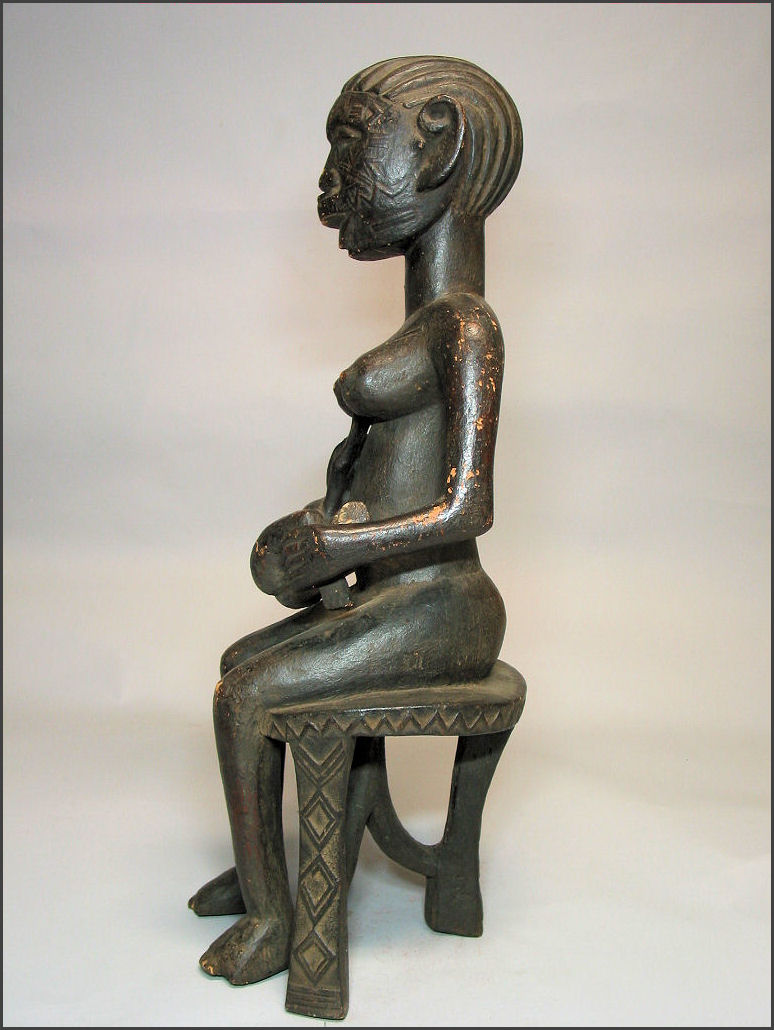
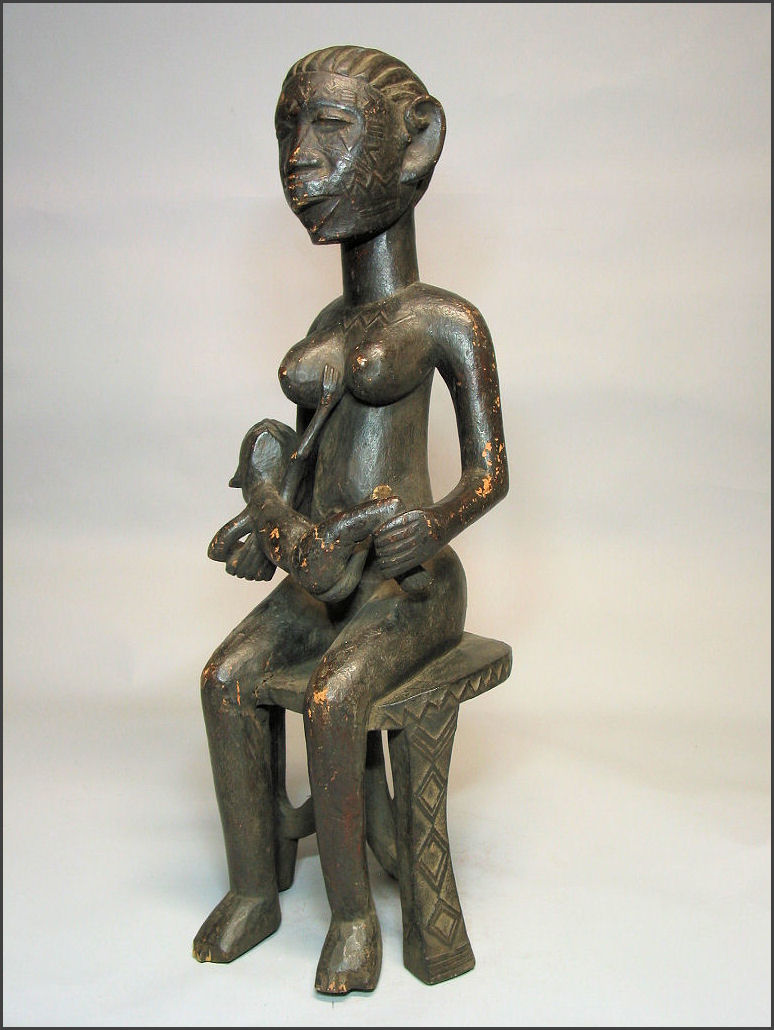
| Makonde maternity figure 25 x 8 3/4 x 7 inches The thing that really drew me to this piece was the pose of the child being held by the mother. "The precolonial Makonde lived in dispersed settlements. Each settlement was composed of a small number of households headed by men belonging to a matrilineal kinship unit called a likola. A likola was said to derive from a common female ancestor, revered as a life-giver and protector, who was represented by figurines only a few inches tall. Carved from soft wood, the images were embellished with traditional body decoration: the face and torso had geometrical designs, and the upper lip exhibited the lip-plug worn by Makonde women of the time. People often carried such carvings with them on long journeys. For example, a man going out to hunt might have tied one to his back or hip to protect him from danger. Other carvings served educational purposes. One of the most important events in the life of a Makonde was initiation. During this intensive months-long ritual, girls and boys were provided with knowledge and skills essential to the Makonde way of life. Carvings sometimes functioned as teaching tools in the context. The Makonde are almost the only ethnicity in East Africa to create fairly naturalistic sculptures – primarily maternity figures, which are intended to ensure the fertility of the fields and women. The upper lip of the female figurine is elongated by a labret. The standing figures often have the arms separated from the body. These male and female figures represent ancestors, and have apotropaic (ward off evil) functions." (zyama) I've been doing a LOT of research on the Makonde and their art and culture and just haven't had the time to do a write up on this page but I plan to do one soon. Resource material on the Makonde is very limited and it doesn't talk about sculpture that much, it mainly focuses on the masking traditions. The Makonde are a fascinating culture and I find them very interesting and I look forward to putting some additional information on this page as I have time. |
| Rand African Art main page Makonde main page Maternity figures main page |
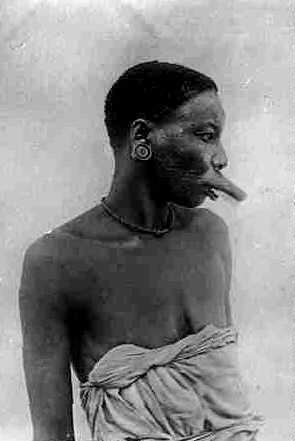
| Initiated Makonde woman wearing earring, necklace and lip-plug in her upper lip. The photo was taken during the German occupation of East Africa as Deutsch Ostafrika (1885-1918). Credit: photo from the Frankfurt University Photographic Archive (image reference 019-0502-18). |
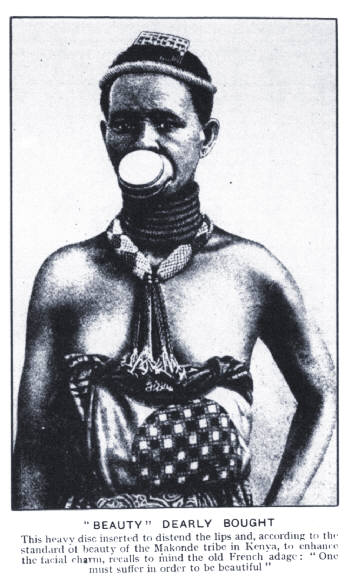
| Makonde aesthetics The mother represented in the figure above is depicted wearing a lip plug (ndonya) CLICK HERE to go to the website of Lars Ktutak that talks about the Makonde facial and body scarifications. "Dinembo: Tribal Tattoos of the Makonde by Lars Krutak" |
|
|
|
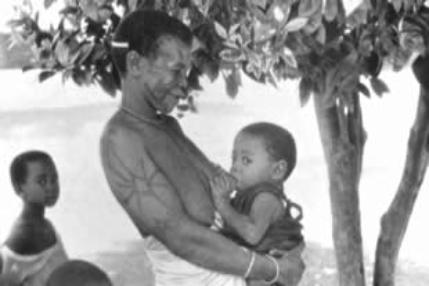
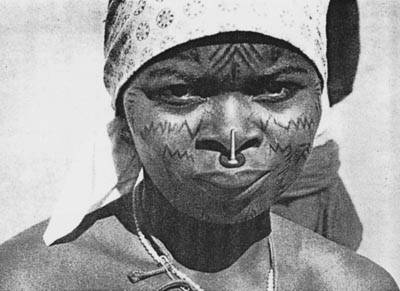
| Makonde women with ndona (labret), forehead, chin, cheek, and sternum tattoos. The labret is made of black ebony with an upright needle passing close to the nose, a sign that the girl is of marriageable age. Photograph ca. 1960. |
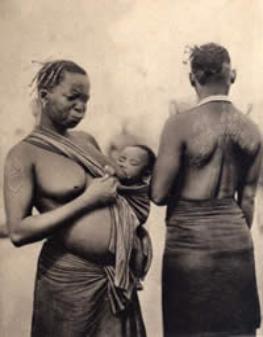
| Two Makonde women & one with elaborate back tattooing comprised of palm frond motifs, ca. 1930. Postcard from the collection of Lars Krutak. |
| Above and below Spanning the facial area above the mouth and across the cheeks and nose, lichumba ("deep angles") mark nearly all tattooed Makonde men and women. Lichumba are almost as common as the woman’s ndona, or upper lip labret. Photographs ca. 1960. |
|
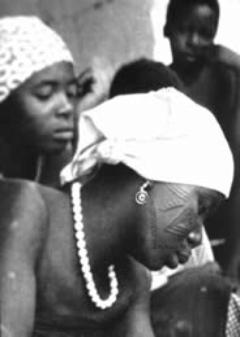
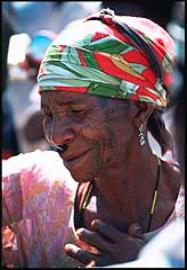
| Makonde woman Photo by: Ronald de Hommel |
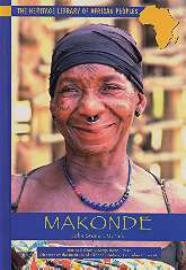
| The cover of the book Makonde - by John Stone |
| Makonde - by John Stone A survey of the society, economy and art of the Makonde of southeast Tanzania and northeast Mozambique. Richly illustrated with colour photographs. Includes a guide to further reading and a glossary. Index, map, 64pp, USA. ROSEN PUBLISHING COMPANY, 082392016X 1998 Hardback Available from the Africa Book Centre On-Line catalog |

| This is the image from the front of the cover of the book Makonde by John Stone I love this image! The Makonde creation myth The Makonde creation myth comes in many different variations, but they all contain the same basic story. The Makonde creation myth contains an element of magic to help explain why the Makonde chose to live on the plateau. According to the main version of the story, a man came out of the thick bush. The man was unwashed and unshaven; he did not eat or drink very much. One day, he carved a human figure from wood and set it upright in the bush. During the night the image came to life and became a woman. The woman became the man's wife. Together, the couple washed for the first time in the Ruvuma River. On the bank of the river, the woman delivered a stillborn child. They traveled a little farther, where the woman delivered another stillborn child. Finally, they traveled to the plateau, where the woman gave birth to a third child, that child survived. Over time, the couple had many other children on the plateau. These children became the first ancestors of the Makonde. The father ordered his descendants to bury anyone who died in an upright position in memory of his wife. She had come alive when the wooden figure of her was set upright, and she had become the mother of all the Makonde. He also warned them against settling in the valleys and near large streams because sickness and death lived there. Each village, he said, should be at least a one-hour walk from the nearest source of water, if they lived any closer, they would be plagued by illness and death. |