
| Makonde Lipico mask (plural - Mapiko) |
| Rand African Art main page Makonde main page |

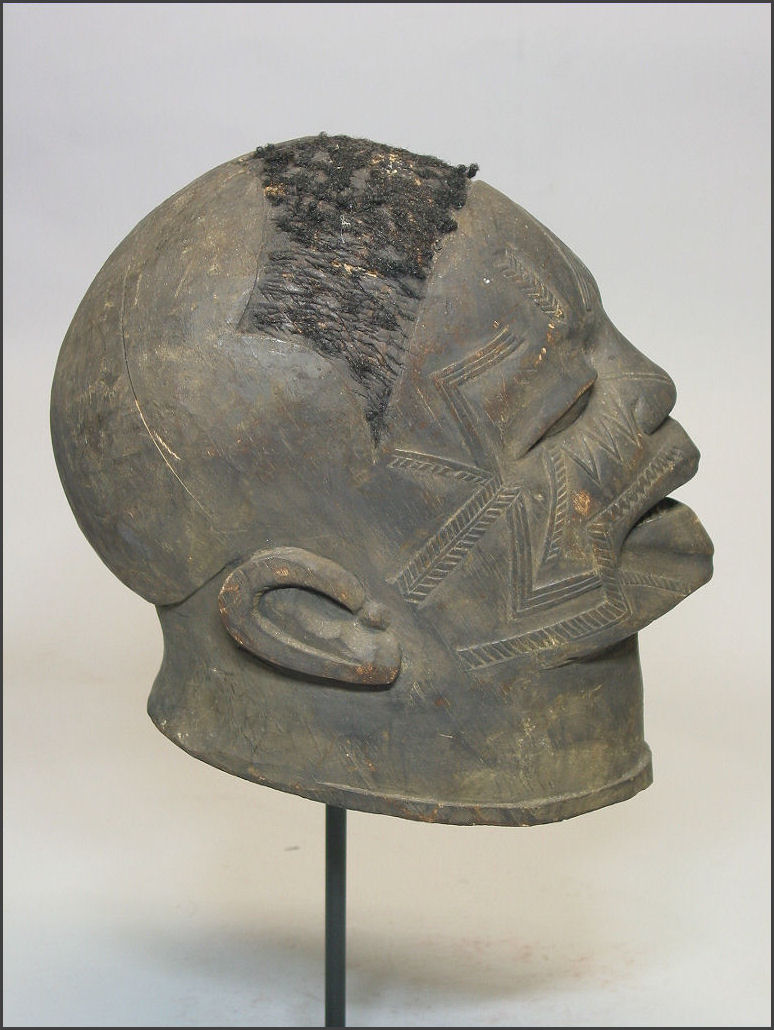
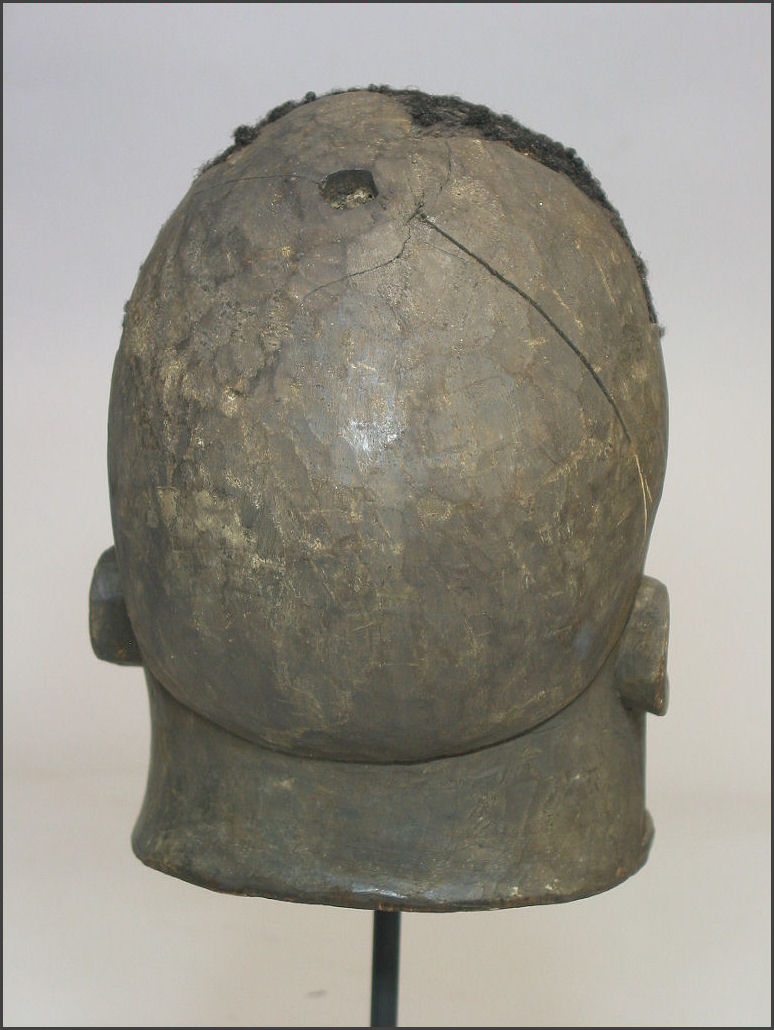
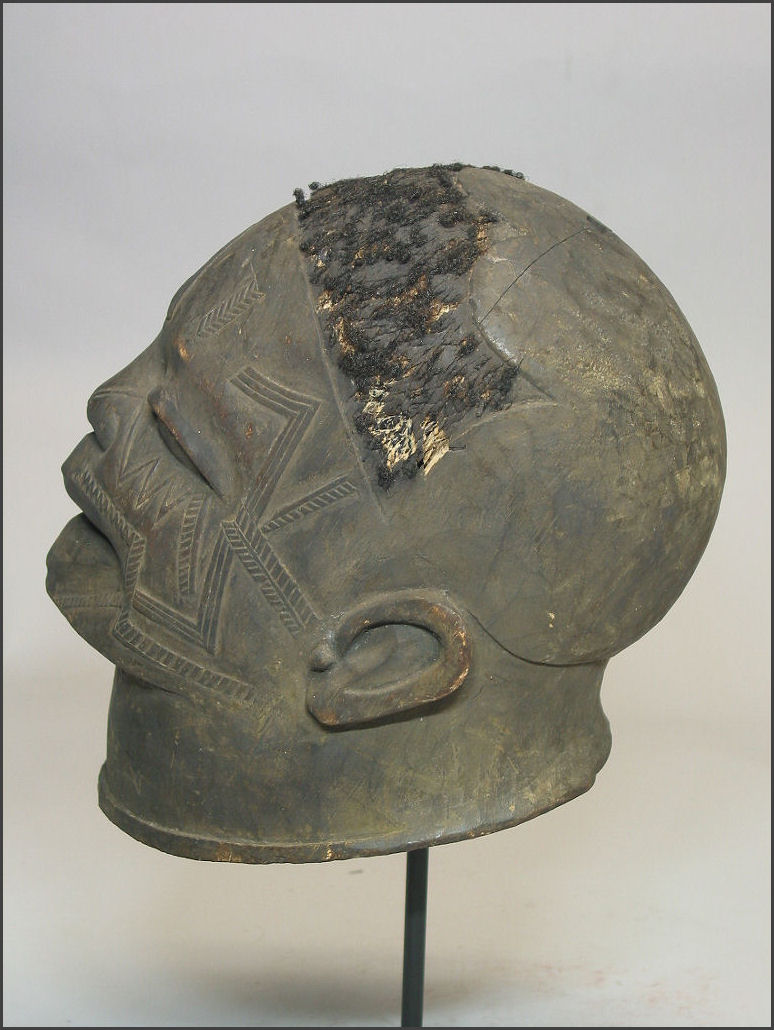
| Makonde Lipico mask Blackened wood with tufts of human hair on top. Raised scarification marks in zigzags and other geometric patterns. Provenance: the estate of Jean-Pierre Hallet, Malibu. 10 1/2 x 7 x 10 1/2 inches. THIS OBJECT IS NO LONGER IN MY COLLECTION Makonde carvers are prolific producers of masks, statues and decorative objects. The most famous Makonde masks are their helmet masks which are used to mark a boy's initiation into adulthood, they are also used in girl's initiation ceremonies. These masks, called Lipico, have realistic features and are often inset with hair and decorated with was facial scarifications. Additional information coming soon... |




| EXAMPLES BELOW ARE NOT IN MY COLLECTION - THEY ARE FOR REFERENCE PURPOSES ONLY |
| Artist: Makonde Title: Helmet Mask Date: late 19th-early 20th century Medium: Wood, hair Dimensions: 8 5/8 x 6 x 9 1/4 in. (21.9 x 15.2 x 23.5 cm) Credit Line: The Ethel Morrison Van Derlip Fund Location: Gallery 254 Object Description Classification: Sculpture Creation Place: Africa, Mozambique, Central Africa region Accession #: 74.77 Owner: The Minneapolis Institute of Arts |

| Makonde Helmet Mask, Fine Arts Museums of San Francisco, Johnson Photo |

| The mask above is in the Gelbard Collection of African Art From the book: Remnants of Ritual Helmet mask, Makonde; Mozambique/Tanzania Wood, pigment, human hair; H. 8 3/4" "The Makonde of northern Mozambique and southern Tanzania wore helmet masks for initiation ceremonies called Lipiko for both boys and girls. The mask or "head of the lipiko" (muti wa lipiko) is made of a light, balsa-like wood and worn with a cloth tied around the bottom rim that falls loosely over the masquerader. The naturalism of these masks is often accentuated by the addition of human hair. Older examples of male masks such as this are often simple and understated. Additionally, some older masks are decorated with applied beeswax to represent raised scarifications. More recent examples display a broader variety of characters. Within an initiation context, boys were forced to overpower the masquerader and unmask the Lipiko. " Source: Remnants of Ritual |
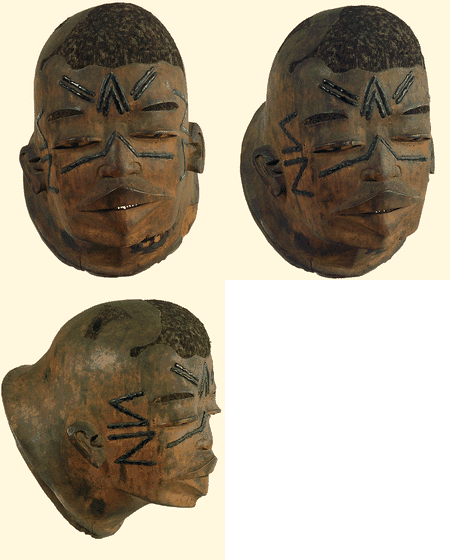
| The mask above is in the collection of the University of Iowa Museum of Art Makonde people, Mozambique mask The Stanley Collection The University of Iowa Museum of Art photo by Ecco Wang CMS498 "The theoretical model developed by the late Victor Turner to describe initiation includes a phase of separation from the child's family and playmates, followed by a liminal state when the child is neither a child nor an adult, but is believed to live in a different world or in a different state, and ending with reintegration as an adult into village society. Among some peoples the metaphor of being eaten by a monster from the wilderness, to spend time in the belly of the beast, and to be reborn or regurgitated as an adult serves as an alternative theoretical model. Scars may be applied to the abdomen and back of the child that imitate the tooth marks of the monster from the wilderness. When the new initiate is "reborn" s/he may need to be taught how to eat, dress, and even speak just as an infant might be taught. The Makonde mask seen here bears the elaborate scars that Makonde men and women wore in the 19th century." source |
| Photos below of Makonde Lipiko in situ Images from - http://makonde.no.sapo.pt/cultura_mapiko.html |


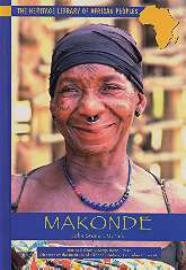
| The cover of the book Makonde - by John Stone |
| Makonde - by John Stone A survey of the society, economy and art of the Makonde of southeast Tanzania and northeast Mozambique. Richly illustrated with colour photographs. Includes a guide to further reading and a glossary. Index, map, 64pp, USA. ROSEN PUBLISHING COMPANY, 082392016X 1998 Hardback Available from the Africa Book Centre On-Line catalog |
| If you're interested in reading more on the Makonde, below are a couple of resources that I find interesting. |
| Symbols of Cultural Identity: A Case Study from Tanzania (from the African Archaeological Review) Abstract "Cultural expressions and their contexts of use among two groups of Maconde form a basis for a discussion of cultural reproduction and the fluidity of ethnic boundaries. The material presented here is based on ethnoarchaeological fieldwork in Tanzania and Mozambique. Two groups, one based in Tanzania and the other in Mozambique, both identify themselves as one group, although they use and display material culture quite differently. The arguments in the paper are concerned with understanding the highly dynamic character of ethnicity in these East African societies and an attempt to look at shifting ethnic boundaries among the groups in the Rovuma Basin, in particular, over the last centuries. Here symbols of cultural identity have been manipulated and reintroduced into new contexts, as cultures change and groups adjust to their social environment." It's an article that you have to order and pay for, but it's actually pretty interesting and a good read. If you're interested in finding out a little more about what this article is about, send me an email. |