
| Chokwe Angola, Democratic Republic of the Congo and Zambia |
| Examples and information for reference purposes |
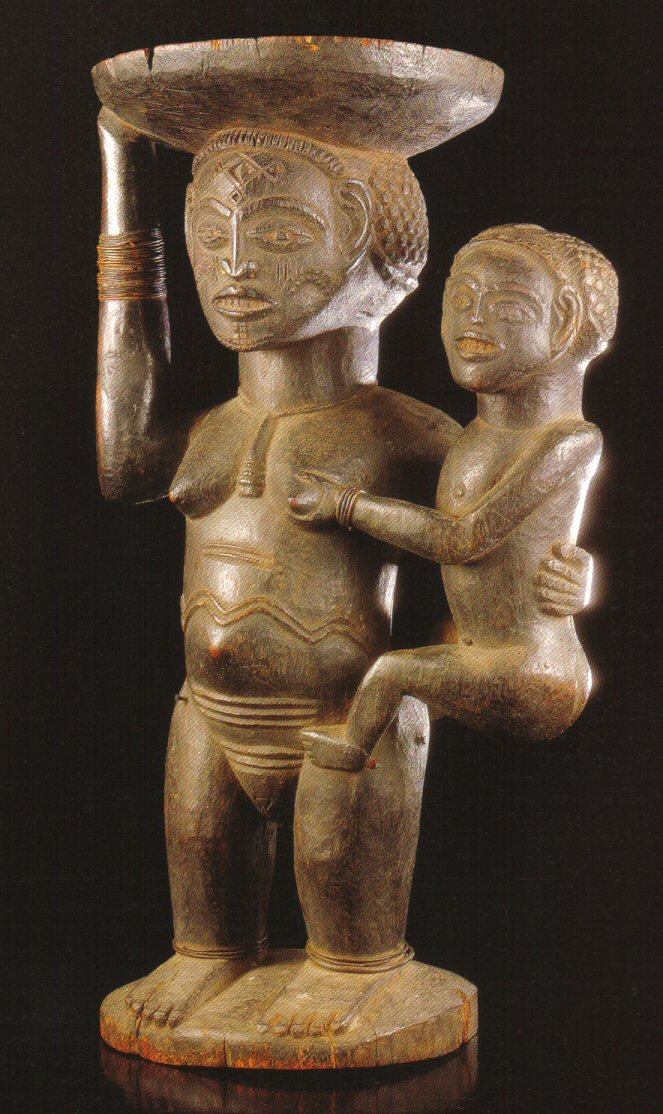
| Stool with mother-and-child figure Chokwe or Minungu, Angola, Lovua area 19th or early 20th century Wood, metal, H. 22 in. Collection of Darwin and Gery Reedy The mother-and-child motif on this caryatid stool symbolically reinforces Chokwe precepts regarding the matrilineal inheritance of royal titles. The female figure physically supports the chief seated on the stool, literally nurtures her child, and metaphor¬cally sustains her community. The elaborate body scarifications represent a woman who has undergone different types of initiation. They identify the ancestor as a mature and fulfilled woman. From the book: Chokwe! |
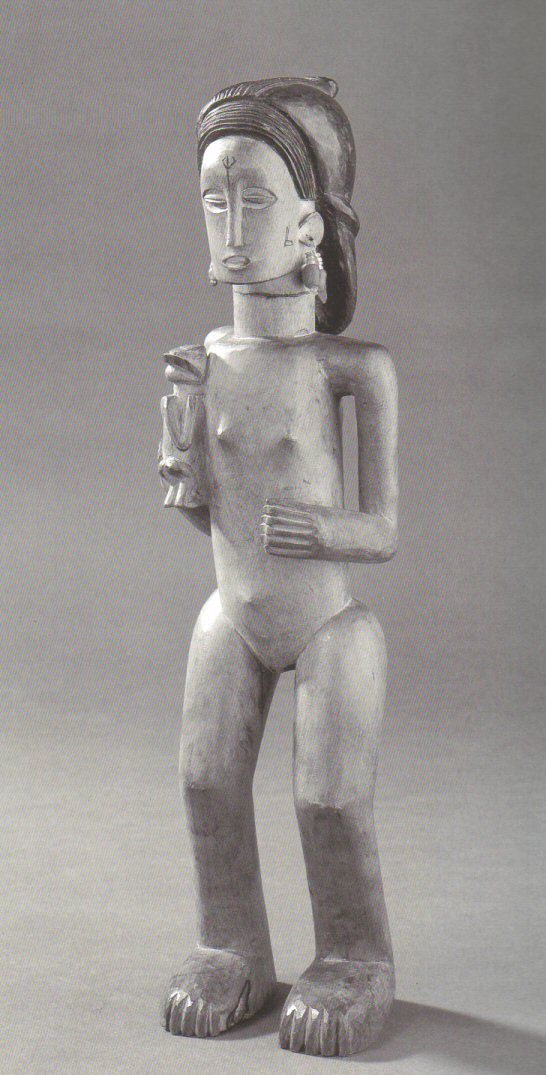
| Mother-and-child figure Ovimbundu, Angola Before 1910 Wood, beads, H. 17 1/4 in. Royal Ontario Museum, gift of Mrs. Walter Thomas Currie, HAC67 This female figure, collected among the Ovimbundu by missionary Walter Thomas Currie, wears a typical Ovimbundu hairstyle and beaded earrings.This elegant sculpture celebrates a fulfilled mother, thus stressing the essential role of women as the providers of life who thereby ensure the community's continuity and prosperity. From the book: Chokwe! |
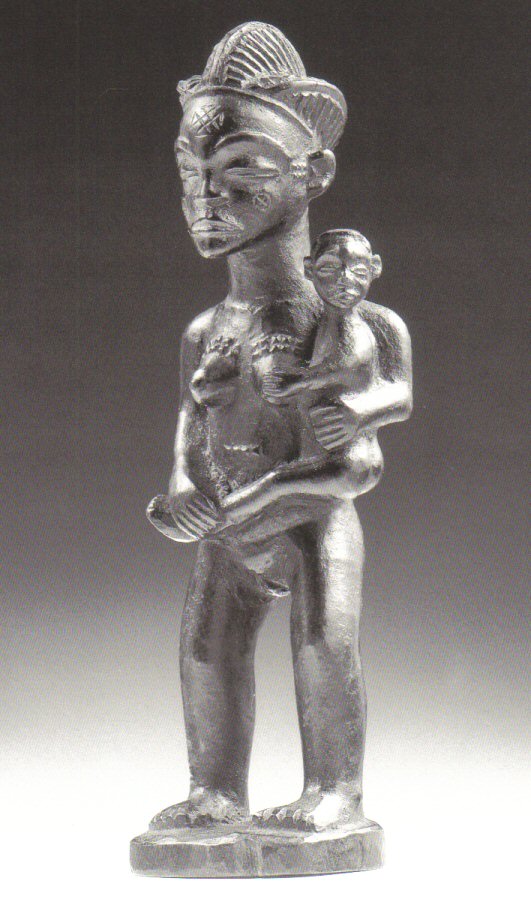
| Mother-and-child figure Chokwe, Angola/Democratic Republic of Congo Early to mid-20th century Wood, H. 8 lh in. Private collection Mother-and-child figures are relatively rare in Chokwe art. This finely carved example celebrates the image of a fulfilled woman proudly holding her child. A small piece of wood was purposely cut from the figure's buttocks, probably to be included among healing medicines. From the book: Chokwe! |
| Rand African Art home page Chokwe main page African maternity figures main page |