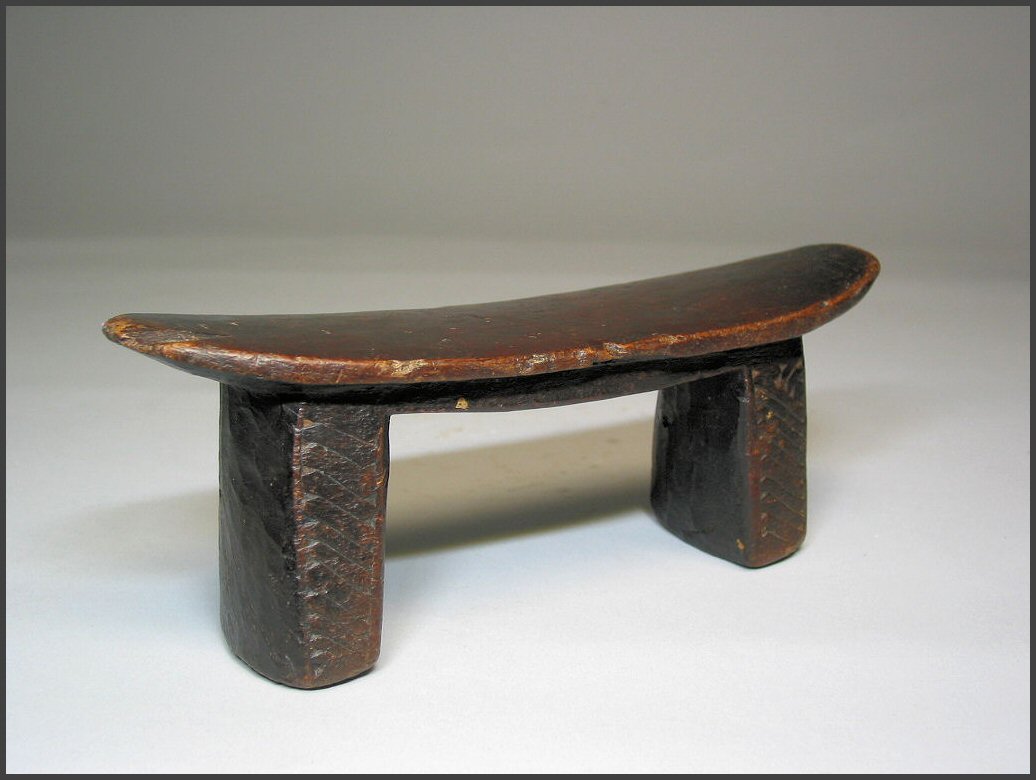
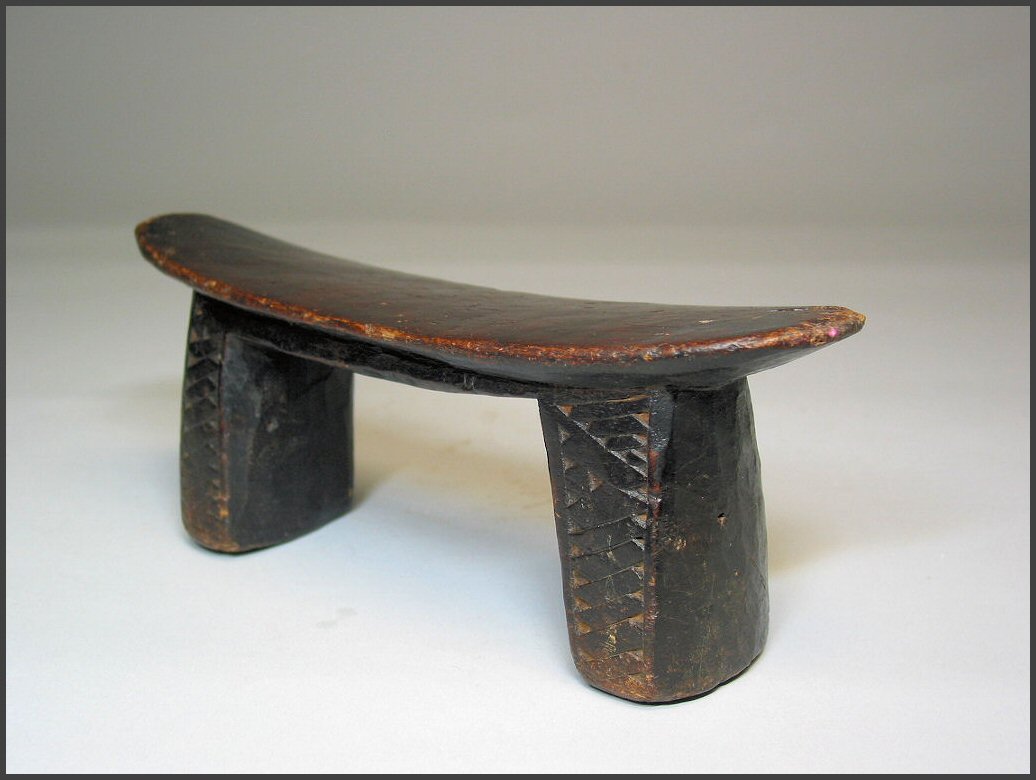
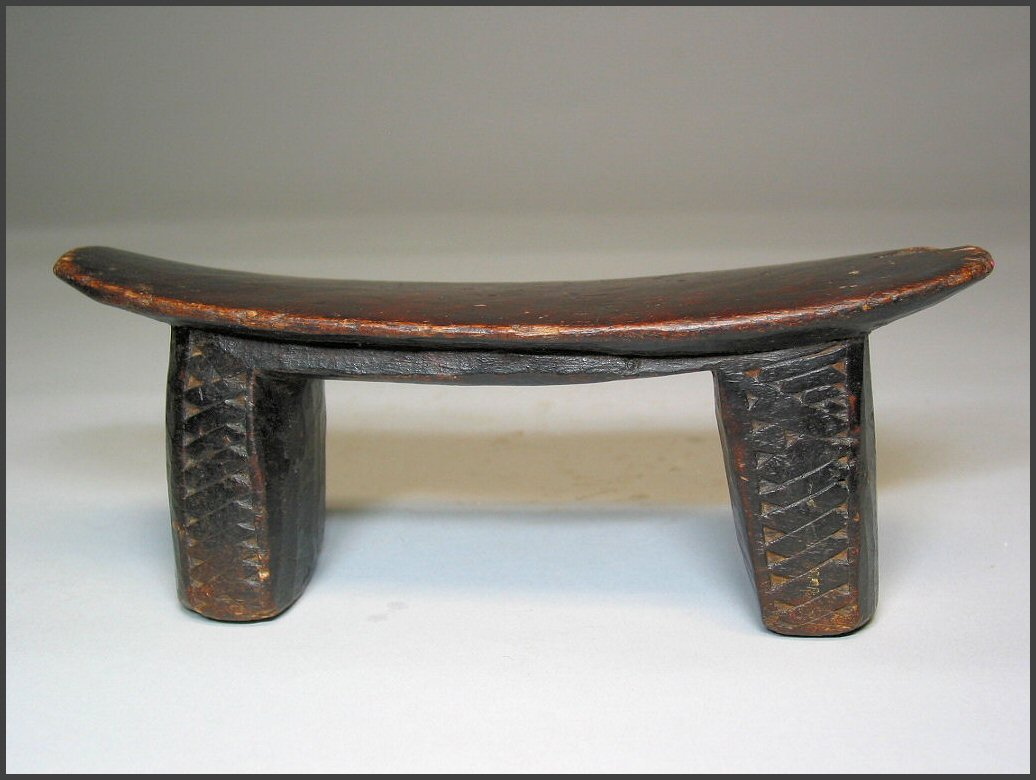
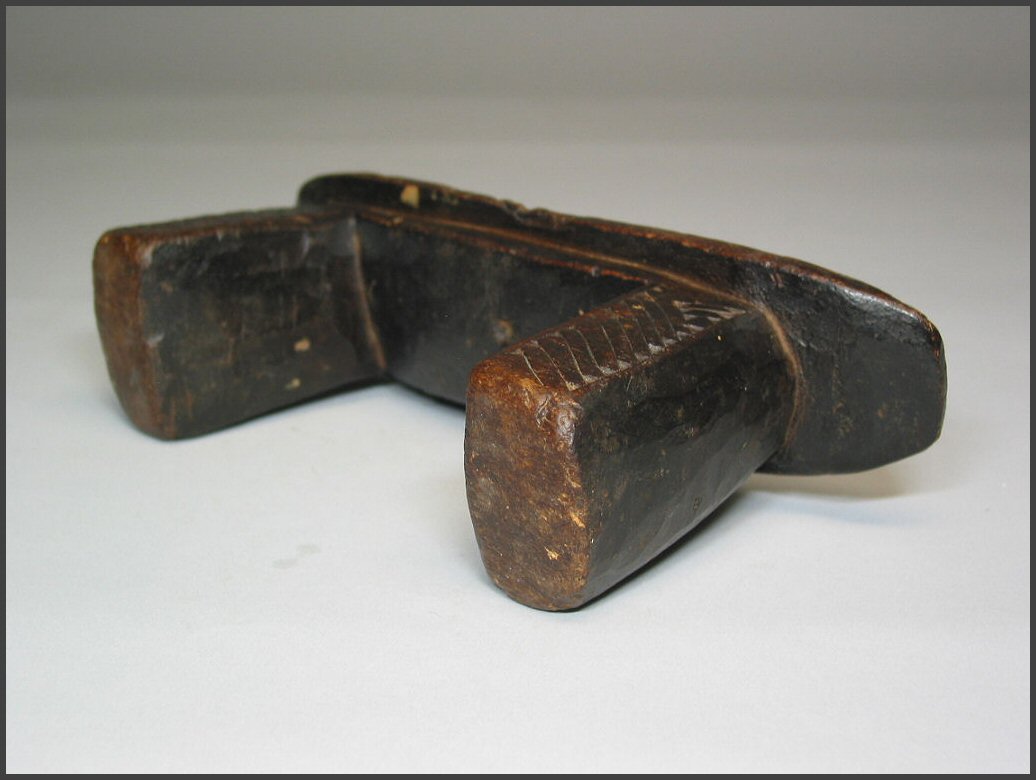
| Womans headrest (barkin) from the Boni or Somali people of Somalia Men in East Africa use headrests both as pillows and as indicators of status. Men's headrests generally feature a smaller base that makes them somewhat unstable to sleep on, while the rectangular bases of women's headrests are usually more stable. The patterns on Somali and Boni headrests probably reflect the Islamic influence in the region. Some scholars interpret the patterns and iconography as a "form of shorthand for a prayer," to ensure God's protection of the sleeper. Headrests also play an important role in the nuptial ceremonies of Somali nomads. On his wedding night, the groom places the tubash (a sum of money) under the bride's headrest. The morning after the marriage is consummated, the bride will use this money to purchase an amber necklace, the symbol of her new status. The headrests are carved from a single piece of fine-grained wood known as hagar in Somali, or also yucub wood. The wood is usually left its natural color, but is sometimes painted red or black by its owner. They may be carved by the owner or commissioned from an artist. References- National Museum of African Art and Metropolitan Museum of Art |

| The Boni people are commonly found in the southern part of Somalia and also in Kenya. |
| Rand African Art home page African headrests main page |
| Boni/Somali womans headrest 4" tall |


| The photo above shows the 3 Boni headrests currently in my collection (male headrests on each end and female headrest in the middle) |